
In today’s economic landscape, companies aren’t always what they seem. In fact, a company like Amazon isn’t just one but a collection of brands. This has become increasingly common; there are often labels within labels, like a nesting doll of consumerism. Take Energizer, for instance.
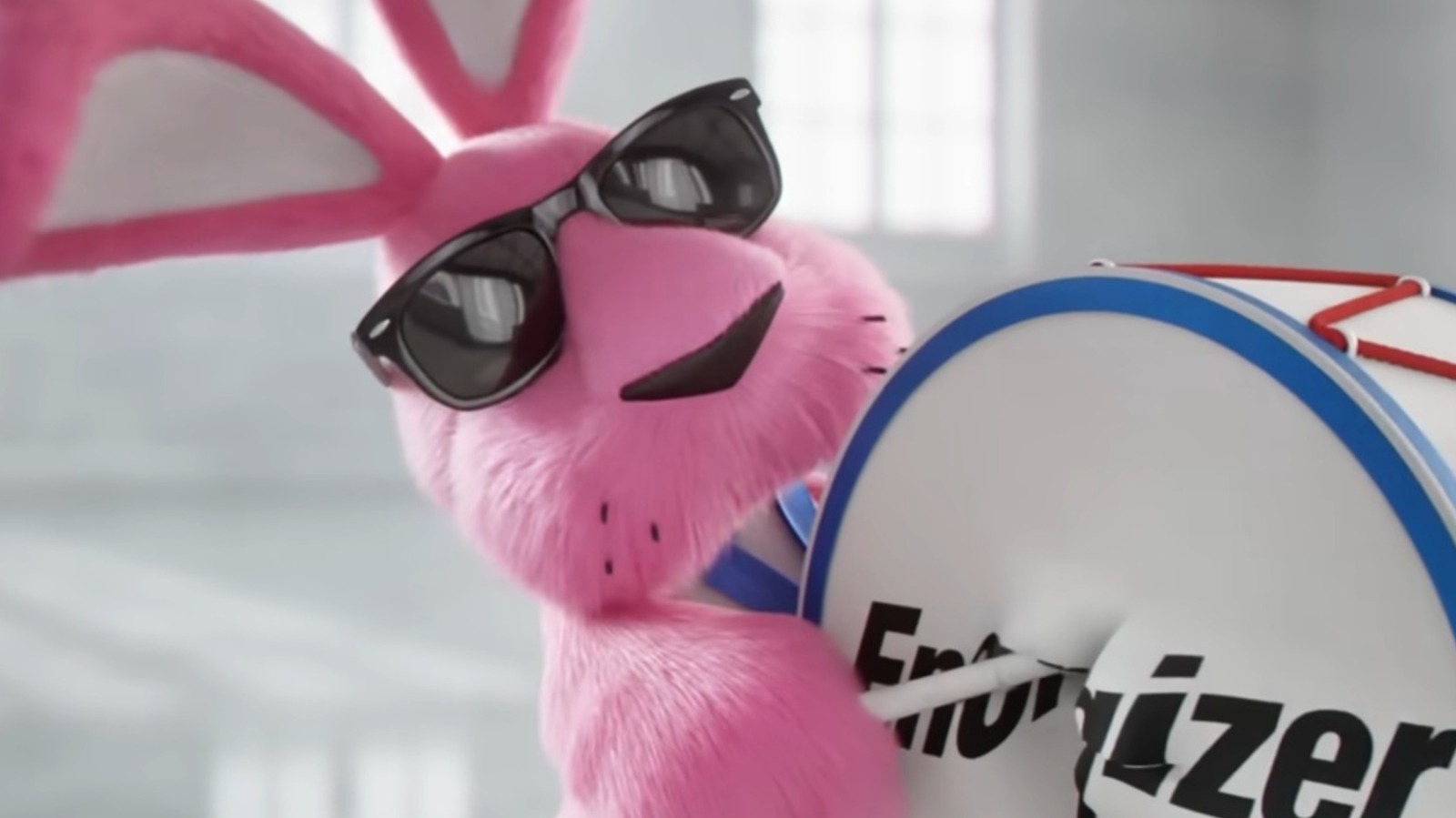
The Energizer brand, famous for high-quality consumer batteries and pink bunnies, is only one brand under the umbrella of a larger company called Energizer Holdings, Inc. Known for a mascot that is as memorable as it is cute and tenacious (he just keeps going and going), the company’s history is complicated, involving mergers and acquisitions enough to leave most consumers scratching their heads.
Like a handful of companies in a trench coat, there are a wide range of subsidiaries all under the Energizer umbrella. Some of those also produce batteries, so even when you’re not buying an Energizer battery, you might be buying one produced by the company. Energizer also has a foothold in automotive products from engine fluids to cleaning supplies and more. Whether you’re hoping to become a more well-informed consumer or you’re just curious, here are ten brands you may not know are owned by Energizer.
Eveready
You’ve likely seen Eveready on the battery shelf next to Energizer, but it’s not a competitor — it’s an Energizer battery by another name. In fact, not only is Eveready owned by Energizer, it’s also where the Energizer brand was born.
Eveready started more than a century ago, getting into the portable power market by making dry cell batteries in the late 1800s. Relatively small and affordable consumer batteries suddenly made it possible to create things like flashlights and other gadgets requiring portable power. Through the company’s early history, Eveready merged with the National Carbon Company, then Union Carbide, to become the Union Carbide and Carbon Company.
Decades later, in 1980, Eveready introduced a new product line with the Energizer battery. Six years later Union Carbide sold off Eveready to Ralston Purina, a name you may recognize from the pet food game. In 2000, Eveready spun off from Ralston Purina to become Energizer Holdings. All the while, Eveready has remained a trusted name in consumer batteries and you can probably still buy Eveready batteries at your local supermarket today.
Rayovac
Once upon a time, Rayovac was a competitor of Energizer. Today, however, the brands have joined forces under the umbrella of Energizer Holdings, Inc.
Rayovac’s history began more than a century ago under the banner of the French Battery Company, despite being founded in Chicago. In 1934, the company changed its name to the much more alluring Ray-O-Vac, later simply Rayovac. Beginning in the early 2000s, Rayovac started to diversify into non-battery related markets, like pet products. After acquiring Tetra, a maker of filters, pumps, and other products for pet fish, Rayovac changed its name to Spectrum Brands. The name change may also have foreshadowed the company’s future. Following financial trouble, Spectrum Brands has continued to evolve, acquiring additional brands while selling off the Rayovac battery division, from which the rest of the company was born.
In 2019, Spectrum sold Rayovac to Energizer for approximately $2 billion as part of a plan to pay off nearly $5 billion in debts. Today, Energizer continues to make conventional batteries, button cell batteries, rechargeable batteries, hearing aid batteries, lighting, and more under the Rayovac brand.
VARTA
Energizer rounds out its consumer power offerings with the German battery brand VARTA. Founded in 1887, the company has a long and storied history with some notable achievements. VARTA is an acronym for the German words Vertrieb, Aufladung, Reparatur Transportabler Akkumulatoren, which mean distribution, charging, and repair of transportable accumulators.
The brand offers a range of consumer energy products including conventional disposable batteries (things like 9V and AA batteries), automotive batteries, micro batteries (like those for hearing aids), coin cell batteries, lithium-ion batteries, and larger energy storage systems. If it holds and delivers power, there’s a good chance VARTA has at least toyed with the technology, and that attitude has paid off. Among other achievements, the company boasts a role in the first human Moon landing back in 1969, with VARTA batteries powering the camera Neil Armstrong carried to the lunar surface.
More recent years have seen the company fracture. In 2002, VARTA sold its automotive battery division to Johnson Controls, Inc. and the consumer battery division (with the exception of button cell batteries) was acquired by Spectrum Brands, aka Rayovac. When Energize acquired Rayovac, it also acquired those VARTA assets.
Armor All
The Armor All brand offers a variety of car care products used to clean and protect a vehicle’s interior and exterior. The brand traces its roots to 1962, when chemist Joe Palcher figured out a formula which protects materials like rubber, plastic, and vinyl from ozone and UV radiation.
The characteristics of Palcher’s formula made it ideal for cleaning and protecting vehicles from environmental exposure. Four years later, Palcher started selling his product under the name Tri-don (the words “no dirt” spelled backward and hyphenated), before selling the company to Alan Rypinski. Later, Rypinski renamed the product Armor All Protectant and the rest is history.
Since that time, the brand has expanded to include other automotive products including car wash, glass cleaner, carpet and upholstery cleaner, air freshener, foaming tire cleaner, and more. Rypinski also wasn’t the last person to see value in the brand. Over the years, Armor All has been acquired a few times, by the likes of Clorox, Avista Capital Partners, Spectrum Brands, and eventually Energizer Holdings, Inc.
STP
It might not seem very descriptive, but the name STP stands for “scientifically treated petroleum,” which is a pretty decent description of what the brand’s early products were designed to do. Today, STP’s products can do quite a bit more. The company was launched with a single product by a trio of businessmen with a few thousand dollars and a dream in 1954. A decade and a half later STP was a publicly traded company sponsoring winning Indy Car drivers like Mario Andretti.
At first, STP’s only product was an additive which reduced motor oil thinning at high pressures and temperatures. Today, the brand sells a range of automotive products like engine oils, emissions systems cleaner, valve cleaner, gas treatments, oil treatments, octane booster, leak treatments, and more. If it goes in or on your car, there’s a good chance STP sells it.
In 2018, Energizer was in the process of finalizing multiple billion-dollar deals with Spectrum Brands. While Energizer Holdings had already established a $2 billion deal with Spectrum for Rayovac and other assets, the company then agreed to an additional $1.25 billion to buy additional assets from Spectrum Brands, including STP.
California Scents (and other air freshener brands)
In recent years, Energizer Holdings has expanded its foothold in the automotive space with brands like STP and Armor All. In 2016, Energizer Holdings acquired the company HandStands, maker of air fresheners and other automotive products under the brands Refresh Your Car!, Driven, Bahama & Co., Eagle One, and California Scents.
HandStands was previously owned by Trivest Partners, who sold the brand to Energizer for approximately $340 million. Energizer described the purchase as complementary to the company’s existing business, taking advantage of similar product and delivery chains, and a match to Energizer’s overall culture.
Today, Energizer Holdings offers in-home products in addition to automotive offerings under the California Scents label. You can find sprays, scent blocks, gels, foggers, pumps, and more. There’s not just one way to deliver nice smells, and California Scents has a broad collection of smells and aroma-delivery methods to choose from. While Energizer’s other automotive brands are largely focused on maintaining your car’s surfaces and interior mechanics, California Scents focuses on the softer side of driving by helping to create a pleasant driving environment.
Tuff Stuff
Tuff Stuff, which moved over to Energizer as part of the Spectrum Brands buyout, is a brand of automotive care products. As the name suggests, Tuff Stuff is designed to help clean tough messes by removing stains and keeping surfaces clean. The brand only has two products — the first is a multi-purpose foam cleaner and the second pulls double duty as a stain remover and multi-purpose cleaner.
The foaming cleaner clings to surfaces and gets into hard to clean nooks and crannies to help lift out dirt. It can be used on various materials including vinyl, upholstery, floor mats, porcelain, plastic, wood, and more. Outside of your car, you can also use the foaming cleaner to wash the walls and floors of your home.
If you need something a little more heavy duty, the stain remover and multi-purpose cleaner might do the trick. It’s effective in part because of the bristled scrubbing cap attached to the top, which allows you to easily scrub cleaner into upholstery and other soft materials. It’s intended for removing mud, dirt, and grease stains from fabric and other washable surfaces.
Lexol
The natural characteristics of skin are such that it makes a pretty good barrier, which is why leather is such a popular material. It can be high quality, warm, waterproof, and pleasing to look at, but it requires some maintenance to keep it looking and working properly. That’s where Lexol products can come in handy.
Lexol is a maker of leather cleaners and conditioners found at hardware and automotive stores all over the place. The company’s products are designed not only to clean and condition leather, but also to make it smell nice and protect it from future damage.
Lexol’s leather cleaner is made to do its job without damaging the material. Meanwhile, Lexol’s leather conditioner gets deeper into the leather to keep it soft and pretty. It’s intended to keep your leather in good condition by preventing long-term damage like drying and cracking. The brand also offers leather quick care wipes for everyday maintenance. When Energizer Holdings acquired HandStands (the same company which owned California Scents), it also acquired Lexol at the same time.
Nu Finish
For many car lovers, car care is as much about exterior beauty as it is about interior power. It should be no surprise then that automotive appearance products are popular. Energizer has stated its intention to target that market sector by expanding its auto appearance portfolio, both by creating new products internally and by acquiring proven brands.
Buying Nu Finish is an example of the latter, bringing an established brand under the Energizer umbrella. Founded nearly a century ago, Nu Finish offers a lineup of products for keeping your car’s exterior looking like new. Previously owned by Reed-Union, Nu Finish has been a part of the Energizer Holdings portfolio since 2018.
Today, Nu Finish continues to offer a variety of car care products including protectant gel for tires and trim, the Scratch Doctor Glass Restore & Repel Kit, Headlight Restore and Repel Kit, coating sprays, scratch remover, car polish, sealant, and more.
Energizer Park
Whether you’ve ever spent any time thinking about it, you’ve probably noticed that a number of public venues are often named after people or companies. There’s a long tradition of companies buying the naming rights for stadiums, arenas, and other large venues.
In the past, stadiums were often named after a person associated with the team, like the Chicago Cubs and Wrigley Field. It wasn’t until 1985 and the Target Center that it became common for the naming rights to sporting venues to be sold off as advertising opportunities. The practice really kicked off in the ’90s and by the turn of the millennium more than half of all sports stadiums and arenas had sold the naming rights. Today, only about one in eight sporting venues aren’t sponsored.
In 2024, Energizer bought the naming rights to a 22,500-seat soccer stadium in St. Louis, Missouri. The stadium was previously known as St. Louis City Stadium, Centene Stadium, and CityPark, home to the St. Louis City SC (soccer club). The soccer pitch itself is set about 40 feet below street level and the venue is just part of the club’s 32-acre stadium district, which also houses a team store, team headquarters, and practice facilities.