




Asus ProArt PZ14
MSRP $2,499.99

“A powerful, polished Windows tablet that delivers.”
Pros
- Exceptionally thin and light
- Sturdy IP52-rated aluminum build
- Vibrant 144Hz OLED with stylus support
- Handles multitasking with ease
- Excellent Adobe app compatibility
- Reliable all-day battery life
- Fast charging with charger in the box
Cons
- Accessories add considerable bulk
- Small, firm trackpad
- Occasional palm touches
- Reflective under strong lighting
- Inadequate graphics performance
- Bulky bundled charger
Quick Recap
The laptop market is going through an awkward transition. On the one hand, AI is pushing manufacturers toward more powerful hardware and higher memory configurations. On the other, a global memory shortage is making RAM and storage increasingly more expensive, both for manufacturers and consumers. Against that backdrop, the Asus ProArt PZ14 is an interesting 2-in-1 option that simplifies the buying decision.
Rather than asking you to choose between a tablet for portability and a laptop for productivity, Asus has tried to make one device serve both roles without treating either as an afterthought. The well-thought-out hardware also powers Windows on Arm in a better and less head-scratching way, as native Arm apps and Microsoft’s improved emulation have made everyday software considerably less of a gamble.
The PZ14 takes that progress and pushes it into a more innovative form factor: a 14-inch OLED tablet with a detachable keyboard, stylus, desktop-class Windows software, and enough performance to handle serious everyday work. It isn’t flawless, particularly when you use it like a conventional laptop.
But Asus deserves credit for attempting something increasingly rare in the PC market: a genuinely one-stop creative machine rather than a collection of compromises sold separately. After spending some time with the Asus 2-in-1 Windows machine, this is what I think about it.
Asus ProArt PZ14 specs
| Specification | |
| Color | Nano Black |
| Operating System | Windows 11 Home (ASUS recommends Windows 11 Pro for business) |
| Processor | Qualcomm Snapdragon X2 Elite (X2E-88-100) 18 cores / 18 threads Up to 4.7 GHz single-core boost, up to 4.0 GHz multi-core 53 MB cache 152 GB/s memory bandwidth |
| NPU | Qualcomm Hexagon NPU up to 80 TOPS |
| Graphics | Qualcomm Adreno GPU |
| Memory | 32 GB LPDDR5X (soldered, non-upgradable) |
| Storage | 1 TB M.2 NVMe PCIe 4.0 SSD 1× M.2 2230 PCIe 4.0×4 slot |
| Display | 14-inch 3K (2880 × 1800) ASUS Lumina Pro OLED 16:10 aspect ratio 144 Hz refresh rate 0.2 ms response time 500 nits (SDR) / 1,000 nits peak HDR 100% DCI-P3, 1,000,000:1 contrast VESA DisplayHDR True Black 1000 PANTONE Validated Anti-reflection coating Touch + stylus support TÜV Rheinland certified |
| Stylus | ASUS Pen 3.0 (SA205H, MPP 2.6, 4,096 pressure levels) – included |
| Keyboard | Detachable backlit Chiclet Soft Keyboard 1.7 mm key travel, spill-resistant Precision touchpad |
| Cameras | Front: 8 MP IR (Windows Hello) Rear: 13 MP Ultra HD (4K) |
| Audio | Dual speakers with Smart Amp + Dolby Atmos High-SNR dual-microphone array with AI Noise Cancellation |
| Connectivity | 2× USB4 Gen 3 Type-C (40 Gbps, Power Delivery, DisplayPort) SD Express 7.0 card reader Wi-Fi 7 (802.11be) 2×2 Triple-band Bluetooth 5.4 |
| Battery | 75 Wh, 4-cell Li-ion (4S1P) |
| Charger | 68W USB-C AC Adapter (20V / 3.4A) |
| Dimensions | 319.6 × 206.4 × 9.0 mm (12.58 × 8.13 × 0.35 in) |
| Weight | 0.79 kg (1.74 lbs) – tablet only |
| Durability | IP52 dust & splash resistance MIL-STD-810H |
| Security | Firmware TPM Microsoft Pluton security processor IR Windows Hello BIOS password protection |
| Software | ProArt Creator Hub, StoryCube, MuseTree, ScreenXpert, GlideX, MyASUS |
| Included in Box | Detachable keyboard, magnetic stand/cover, ASUS Pen 3.0, protective sleeve, 68W charger |
Asus ProArt PZ14 design: It nails the tablet part, but the laptop isn’t without flaws
Quick Take: The ProArt PZ14 gets the tablet-first formula mostly right, pairing impressive portability and versatility with a few compromises.
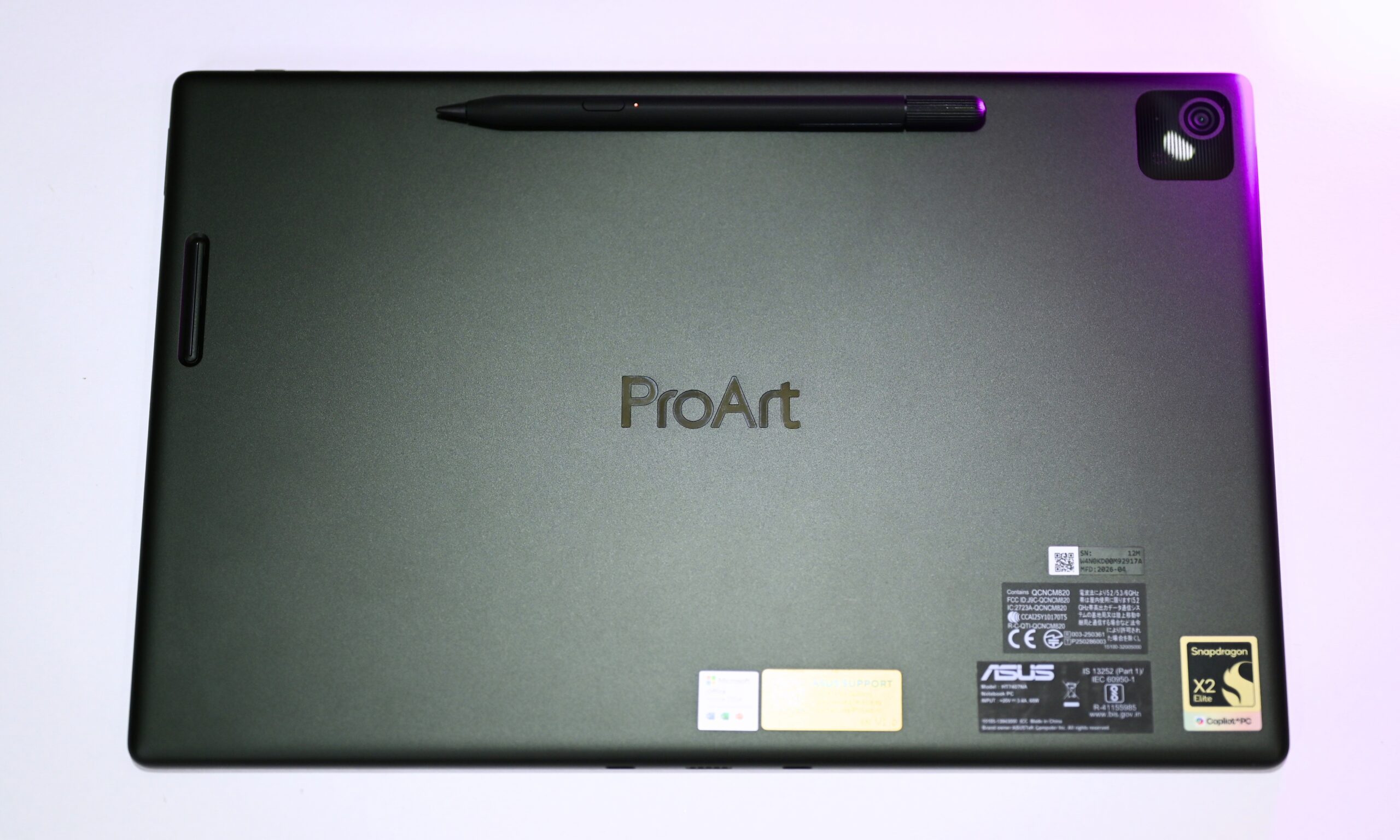
Overall dimensions and weight
The portability-first approach makes the Asus ProArt PZ14 feel more like a Windows tablet and less like a Windows 2-in-1 to me, and honestly, I think that’s a good thing. The screen-only version measures 320 x 206 x 9 mm and weighs about 790 grams, which is remarkably easy to slip into a bag and carry around.
Thanks to the aluminum chassis, the device feels quite robust in hand. The curved edges also make it comfortable to hold. However, given the screen size, you’ll probably find yourself looking for a surface to prop it against, which is where the included kickstand comes in handy. It does a great job holding the tablet securely at different angles and stays stable while you tap the touchscreen.
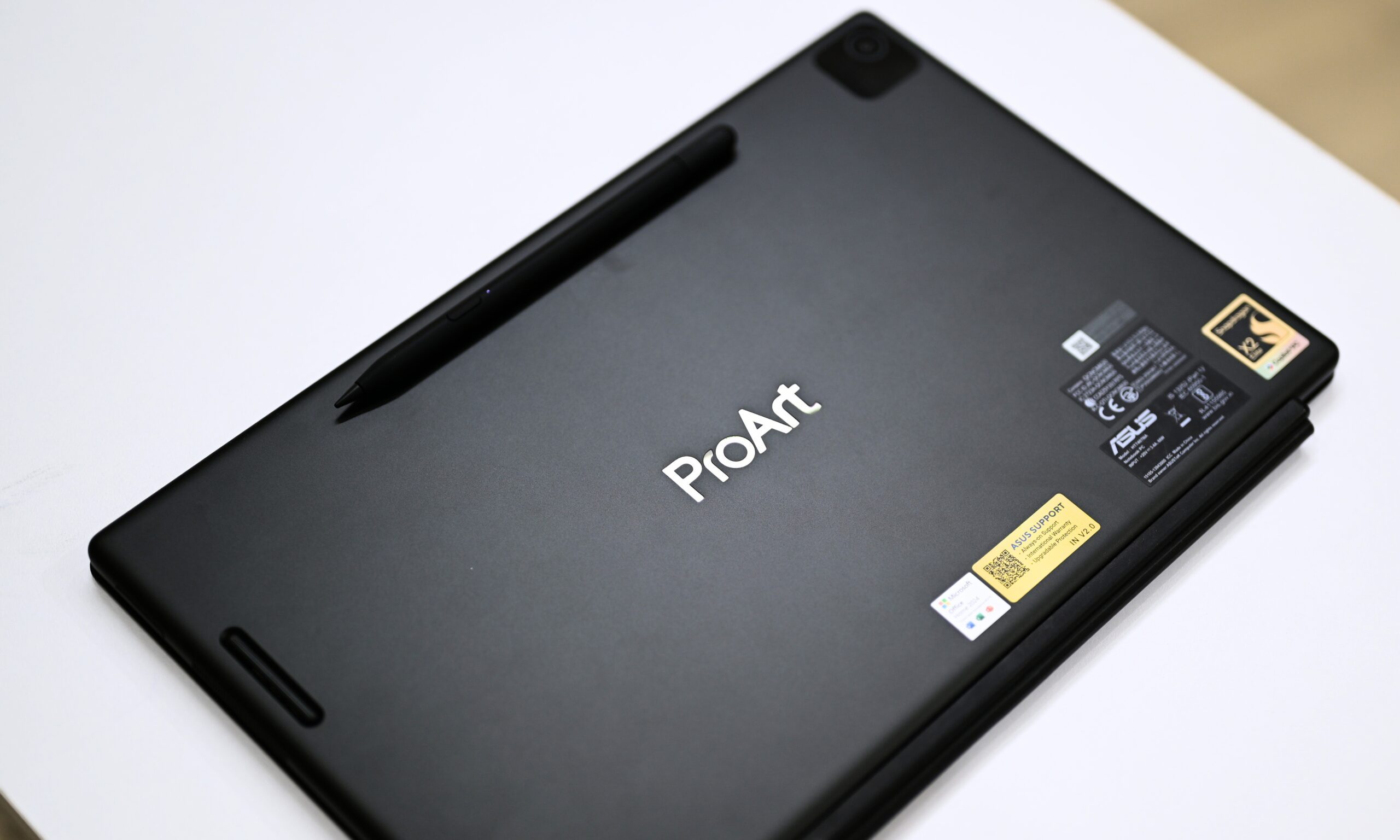
Don’t get me wrong, though. In-hand use is absolutely possible. The only thing that bothered me was the occasional accidental touch input from my palm, as the bezels aren’t quite thick enough to keep them at bay.
Two-handed use, particularly while watching videos or movies, was more comfortable for me. Asus also specifically markets the finish as smudge-resistant.
In its Nano Black finish, the device has a stealthy, low-profile look that draws attention without turning the back panel into a fingerprint magnet.
For context, and to give Asus a little credit where it’s due, the 13-inch Surface Pro (12th Edition) has a 9.3mm profile and weighs around 895 grams. Despite having a smaller 13-inch screen, the Surface Pro is actually thicker and heavier. That makes the ProArt PZ14’s dimensions even more impressive, especially since you’re getting a 14-inch display.
Tablet-only experience and the detachable keyboard
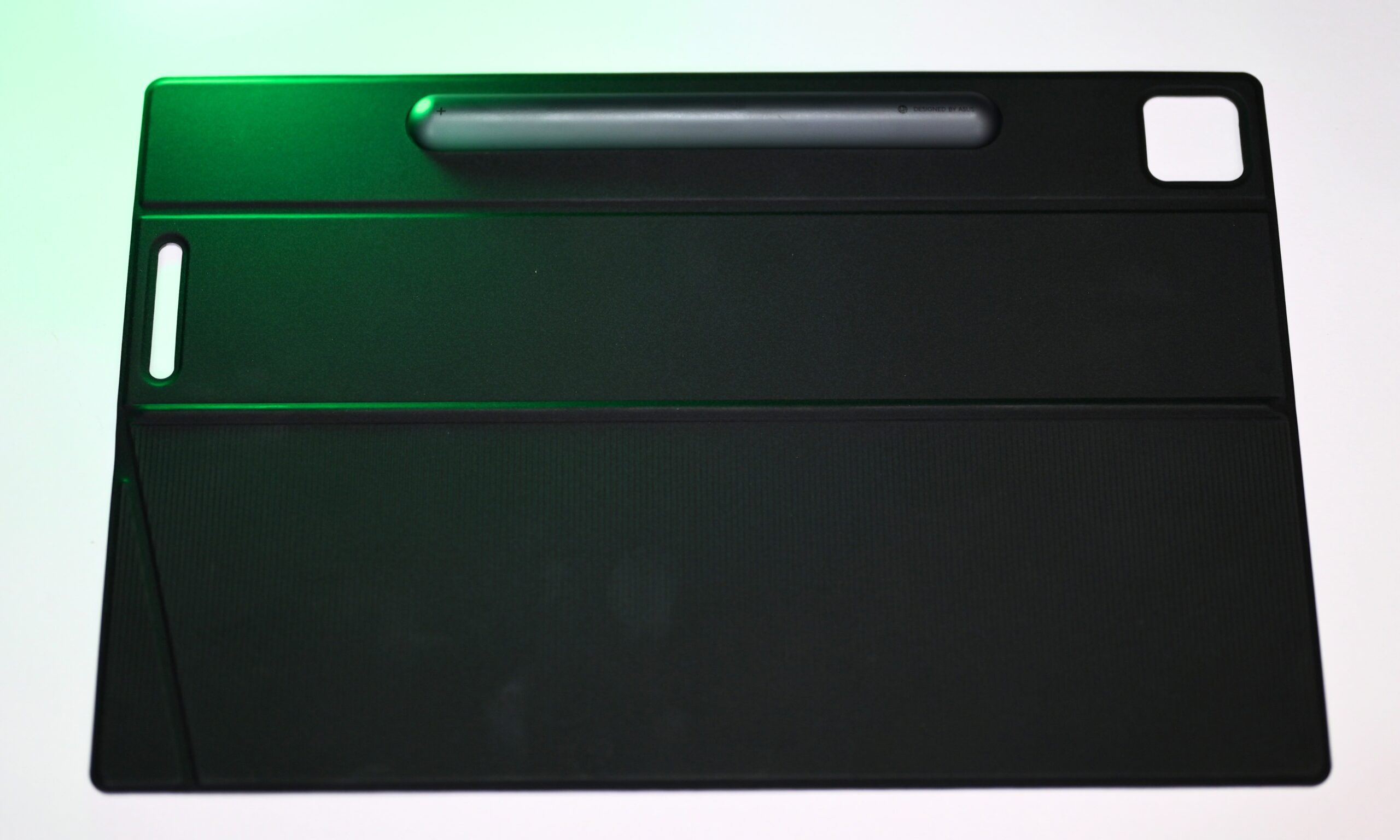
However, snap on the magnetic stand cover (around 270g) and the detachable keyboard (470g), and the combined weight climbs to around 1.5kg, making it a bit heavier than the 13-inch MacBook Air or the 13-inch iPad Pro with a Magic Keyboard.
That’s the murkier part. The complete package, I’d say, gets a little cumbersome, because the accessories add noticeable bulk and thickness. The stand cover can also pop open when you’re carrying the device and make a sudden movement. To counter that, I had to grip it a little harder than usual.
To put that weight into perspective, the 13-inch Surface Pro comes in at around 895 grams before its keyboard, and Microsoft’s keyboard adds to the overall carry weight. Speaking of the detachable keyboard, I have plenty of first-hand observations here, too.
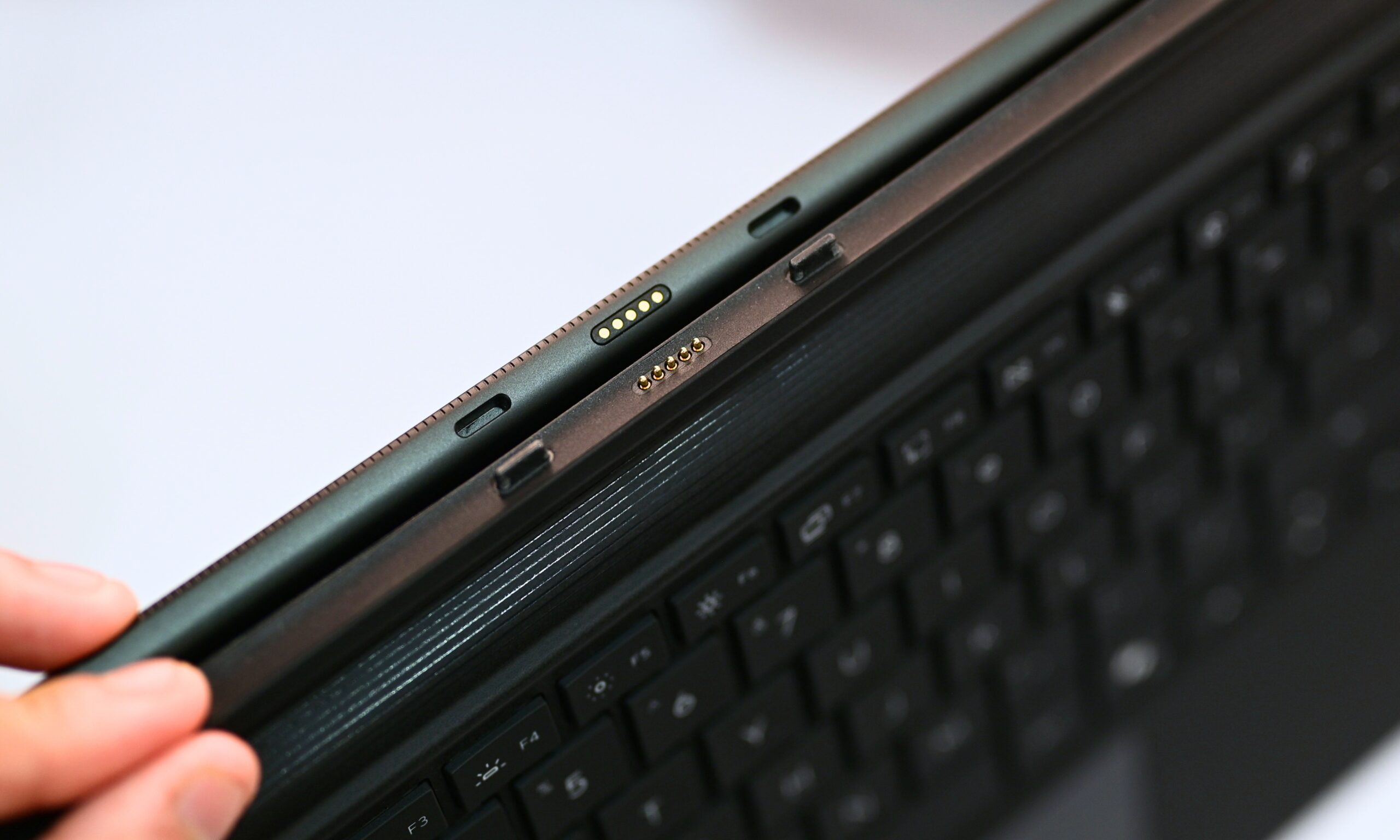
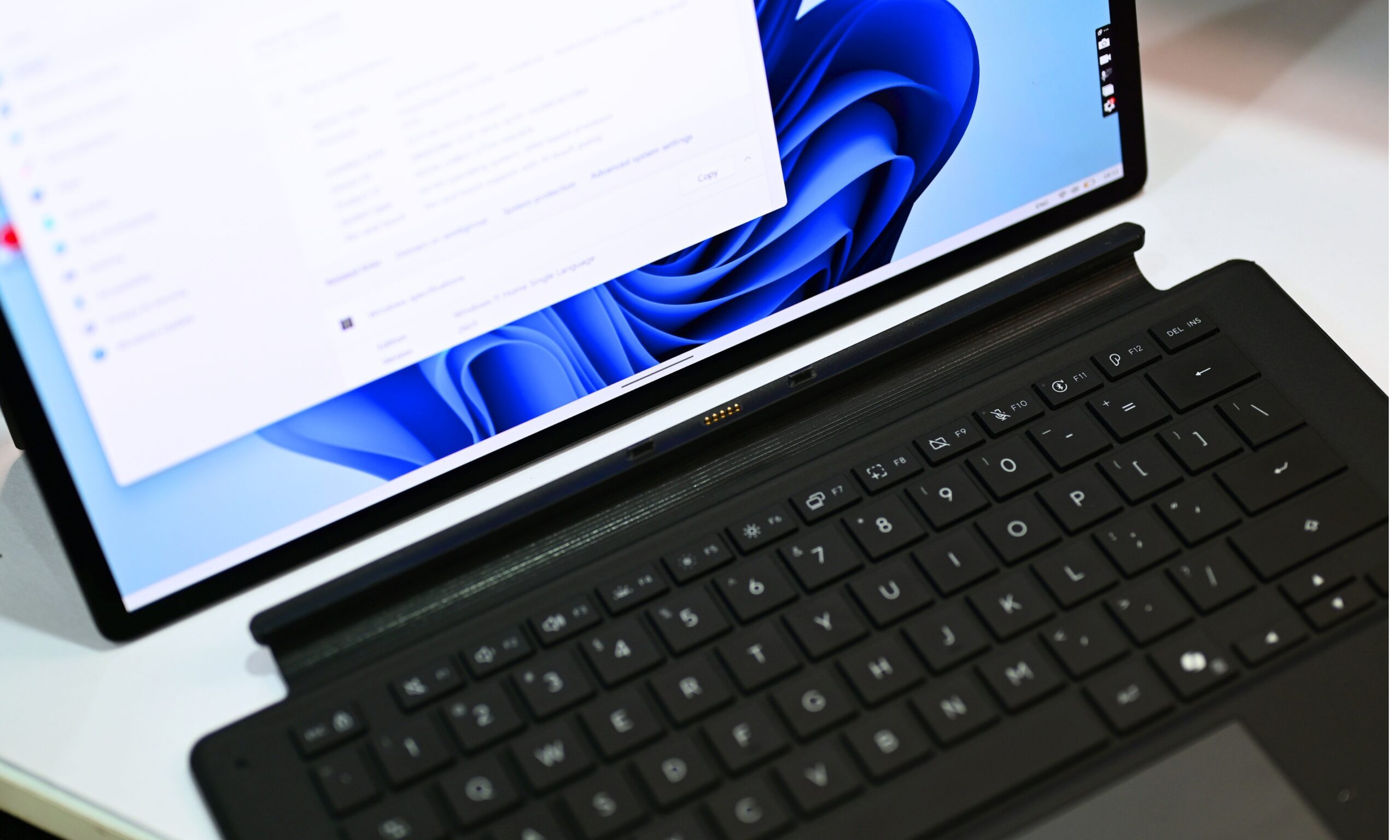
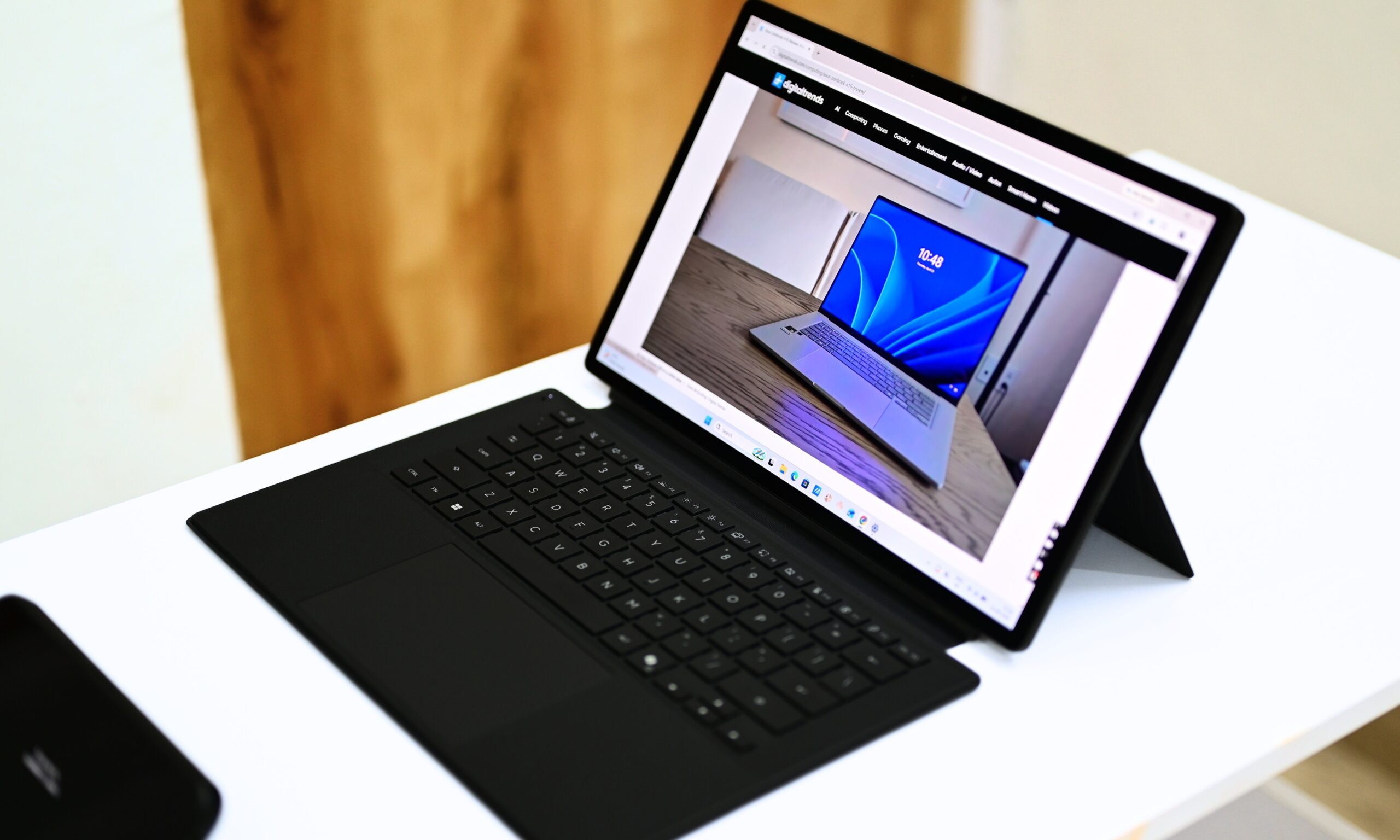
Attaching and detaching it feels almost magical. All you have to do is align the keyboard, and the tablet and magnetic mechanism snap into place.
The pogo pins take over from there for data transmission. Detaching is just as simple. Once, I pranked my sister by pulling the tablet away from the keyboard while holding it out toward her, and she genuinely thought I had just broken the laptop in half.
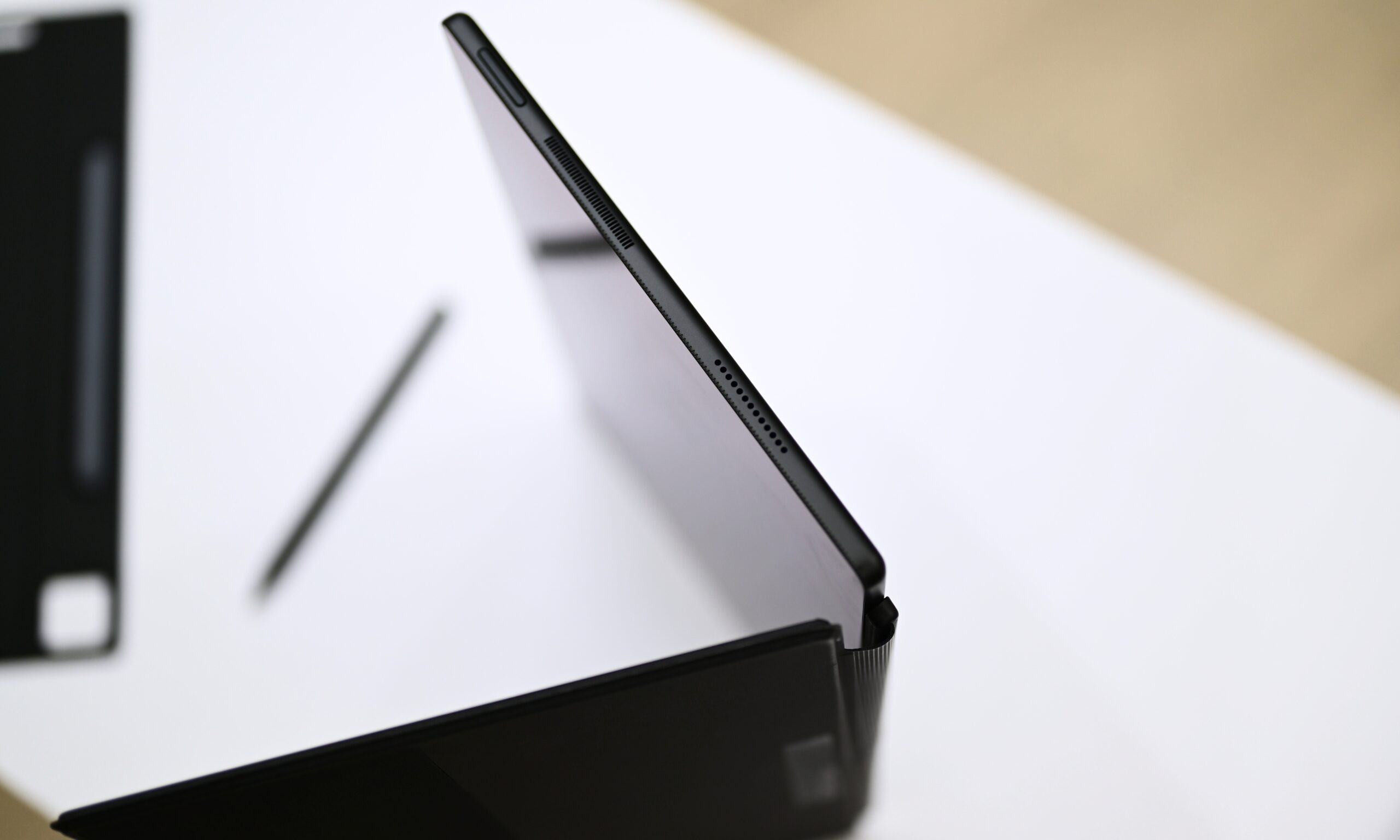
Silly anecdotes aside, the ProArt PZ14 absolutely earns its 2-in-1 credentials, not just because it has a touchscreen and detachable keyboard, but because you can switch from laptop mode to tablet mode in practically a second.
The keyboard is great for casual use, but if your fingers spend most of your workday planted on the keys, it doesn’t feel quite as accommodating as, say, Apple’s iPad keyboards. Without a hinge mechanism to hold the keyboard firmly in place, an accidental jab while reaching for something across the table can nudge it sideways, which can be distracting when you’re typing quickly.
I’d say the key travel is above average. While the company claims 1.7mm of key travel, I’ve used other keyboards with the same figure that somehow feel more substantial and satisfying under the fingers. The trackpad is smaller and needs a firmer press than I expected, which took some getting used to after the wonderfully effortless trackpads I’m accustomed to on MacBooks.
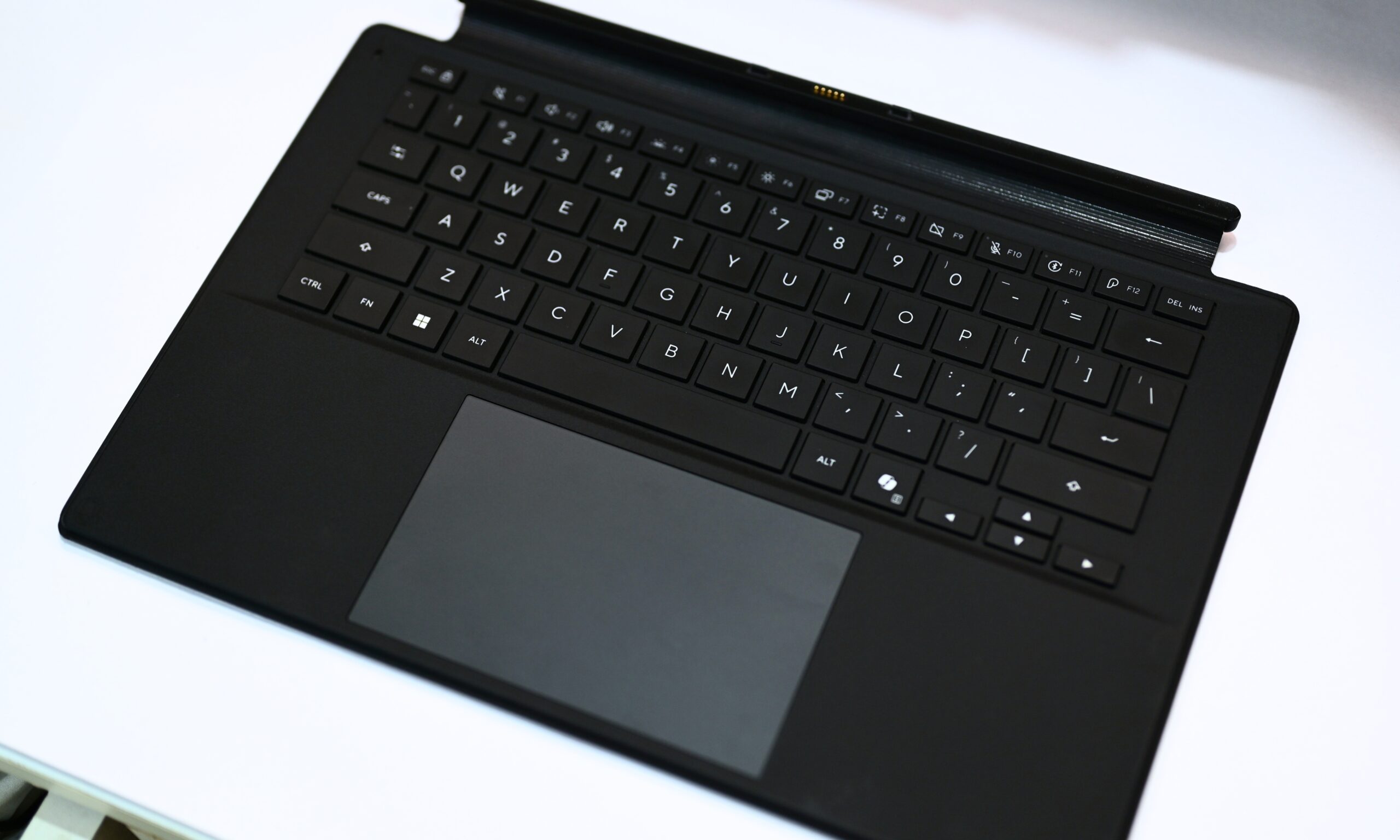
It works, but it’s one of those areas where the tablet-first design occasionally reminds you that you’re asking a very thin accessory to moonlight as a laptop. Keep in mind: the keyboard works when detached, but don’t leave it detached for long, since it relies on the tablet to charge. Further, you’ll have a hard time using it as a laptop in your lap.
What makes this 2-in-1 even more versatile for me is the inclusion of two USB 4 Gen 3 Type-C with an SD Express 7.0 card reader.
Ports and IP rating
The USB-C ports support 40Gbps speeds, Power Delivery, and DisplayPort output. The card reader, in particular, feels like a surprisingly thoughtful addition on a device this thin, especially if you’re someone like me who regularly moves photos and other large files around. Again, the 13-inch Surface Pro doesn’t get one.
Finally, the 2-in-1 Windows tablet has IP52 dust and splash resistance, which is a good thing as most 2-in-1s skip it entirely. But I’d advise you not to get too comfortable or carry it carelessly: treat the IP rating as a safety net. It also complies with the MIL-STD-810H standard, something that I couldn’t put to the test.
Design Score: 9/10
Asus ProArt PZ14 display: The OLED screen is gorgeous, but there’s one thing I’d change
Quick Take: The ProArt PZ14’s OLED display is one of its biggest strengths, combining vibrant colors, high refresh rate, touch, and excellent HDR with only a few outdoor-use caveats.
Display size, resolution, and refresh rate
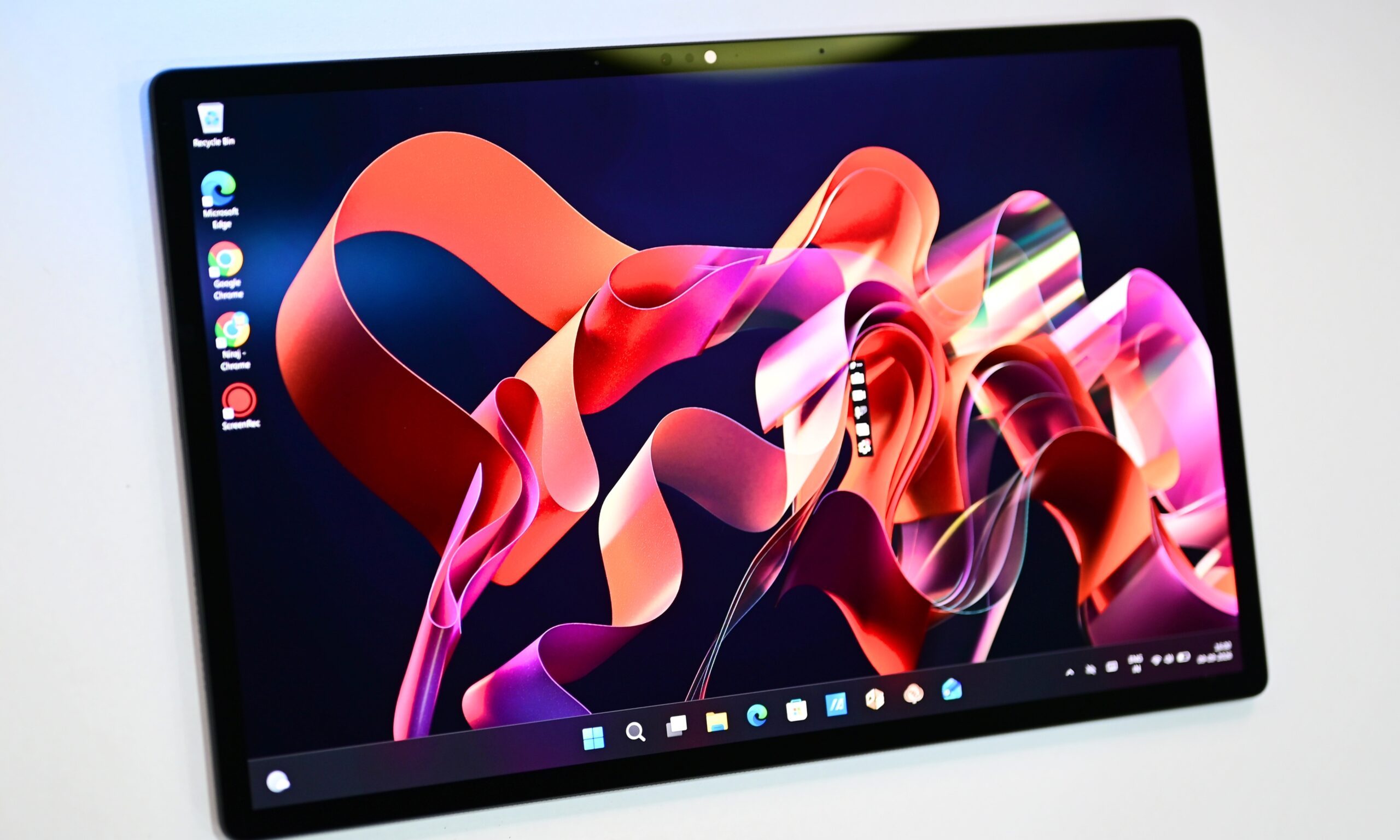
The 14-inch screen is perhaps the ProArt PZ14’s main selling point. First, it’s a gorgeous OLED display with 2880 x 1800 pixels (222 ppi). The resolution may look lower at first glance, especially compared with a modern OLED smartphone, but it’s standard for laptops and 2-in-1s. Second, it supports up to a 144Hz refresh rate (higher than that on the 13-inch Surface Pro), which makes casual scrolling and watching fast-moving video feel smoother than on regular 60 Hz or 120 Hz displays.
Finally, it supports touch input, which, let me tell you, is a surprisingly transformative feature in real life. After spending some time with the device, I’ve found myself reaching for it to close a Chrome tab on my MacBook screen at least a couple of dozen times.
Once you get used to tapping, swiping, and closing things directly on the display, going back to a conventional laptop screen feels oddly cumbersome.
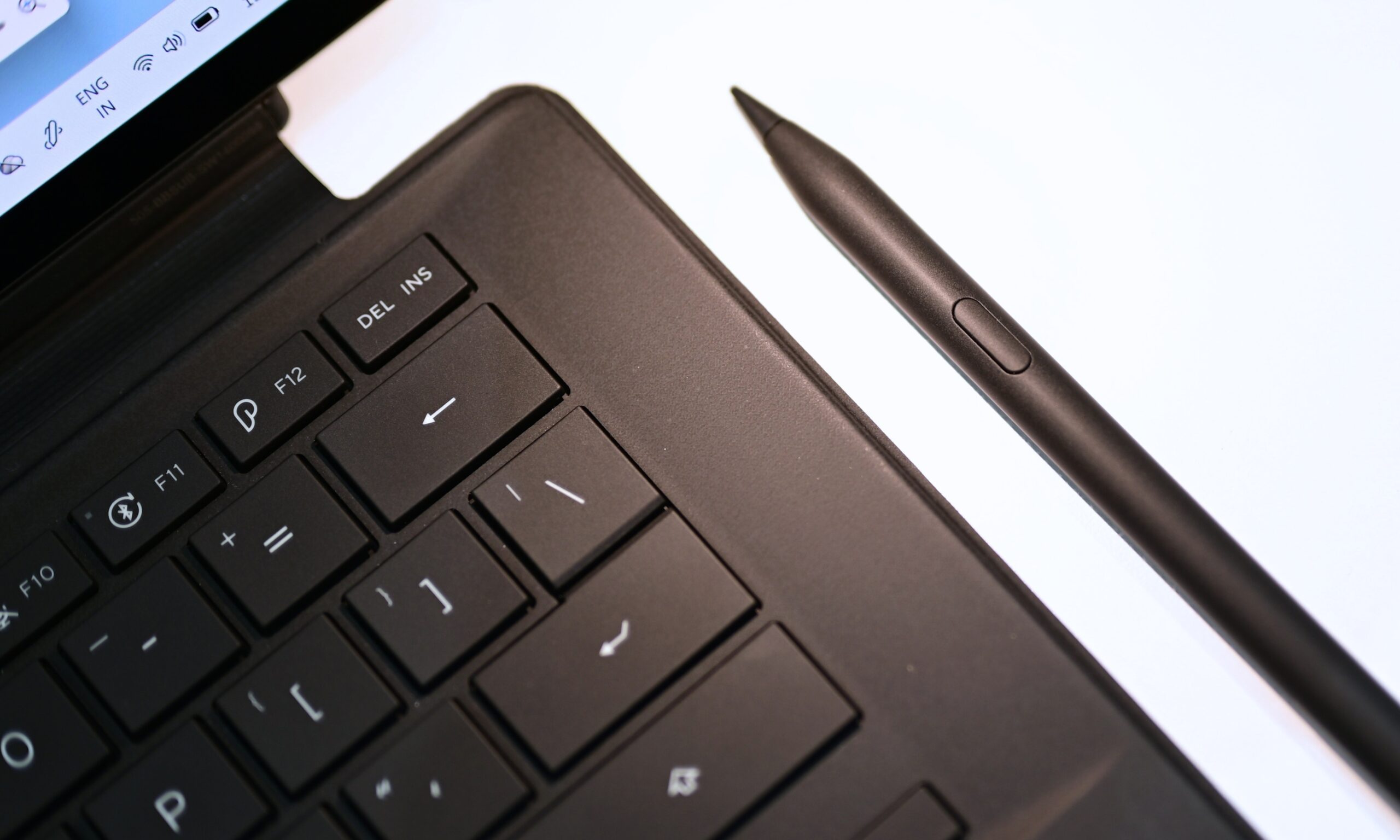
The cherry on top is the Asus Pen 3.0 included in the box.
The stylus attaches magnetically to the ProArt’s rear panel to charge, making it easy to track; it connects seamlessly and glides over the display with no perceptible lag or friction. It’s quite responsive, I’d say. Asus says that the stylus supports Microsoft Pen Protocol 2.6 and 4,096 levels of pressure sensitivity, which is certainly a great addition for creatives and designers.
OLED display and brightness
But the most important, and perhaps the most understated, part of the experience is the OLED panel itself. Setting aside the fact that it made my M5 MacBook Air’s display look noticeably paler by comparison, it is one of the most vibrant and bright displays I’ve ever tested on a 2-in-1 laptop. Deep, inky blacks, punchy colors, and striking contrast are all part of the package, and they remain impressive both indoors and outdoors.
A 500-nit peak brightness is enough for SDR content. However, HDR is where the panel really shows what it can do. I’m talking about 1,000 nits of HDR peak brightness that gives bright highlights more punch while bringing out additional detail in darker areas of the image.
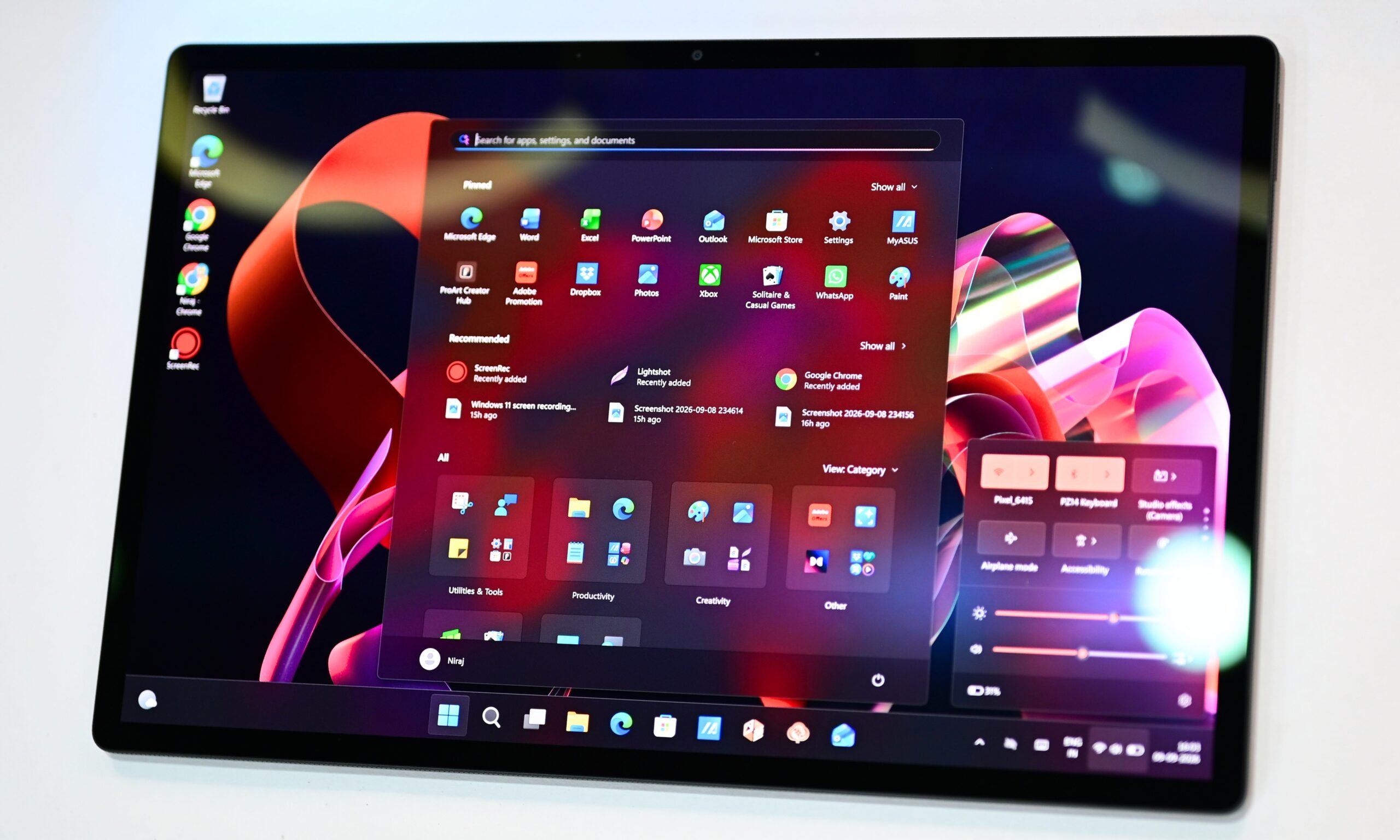
Watching a movie or show indoors is where I appreciated this most. Even outdoors, the screen is perfectly visible, except under direct sunlight.
In direct sunlight, though, I felt like the screen could use a couple hundred more nits.
But even then, the text on the screen remained perfectly legible, and so did the colors and the contrast. You might not want to work directly beneath a bright light source, though. Even with the anti-reflective treatment, strong ambient light can still show up as distracting reflections, making it harder to focus on the screen. I noticed this most under ceiling-mounted lights.
With its lightweight design and detachable tablet form factor, the 2-in-1 is designed to travel with you, but the remaining glare can somewhat undermine that otherwise excellent on-the-go experience.
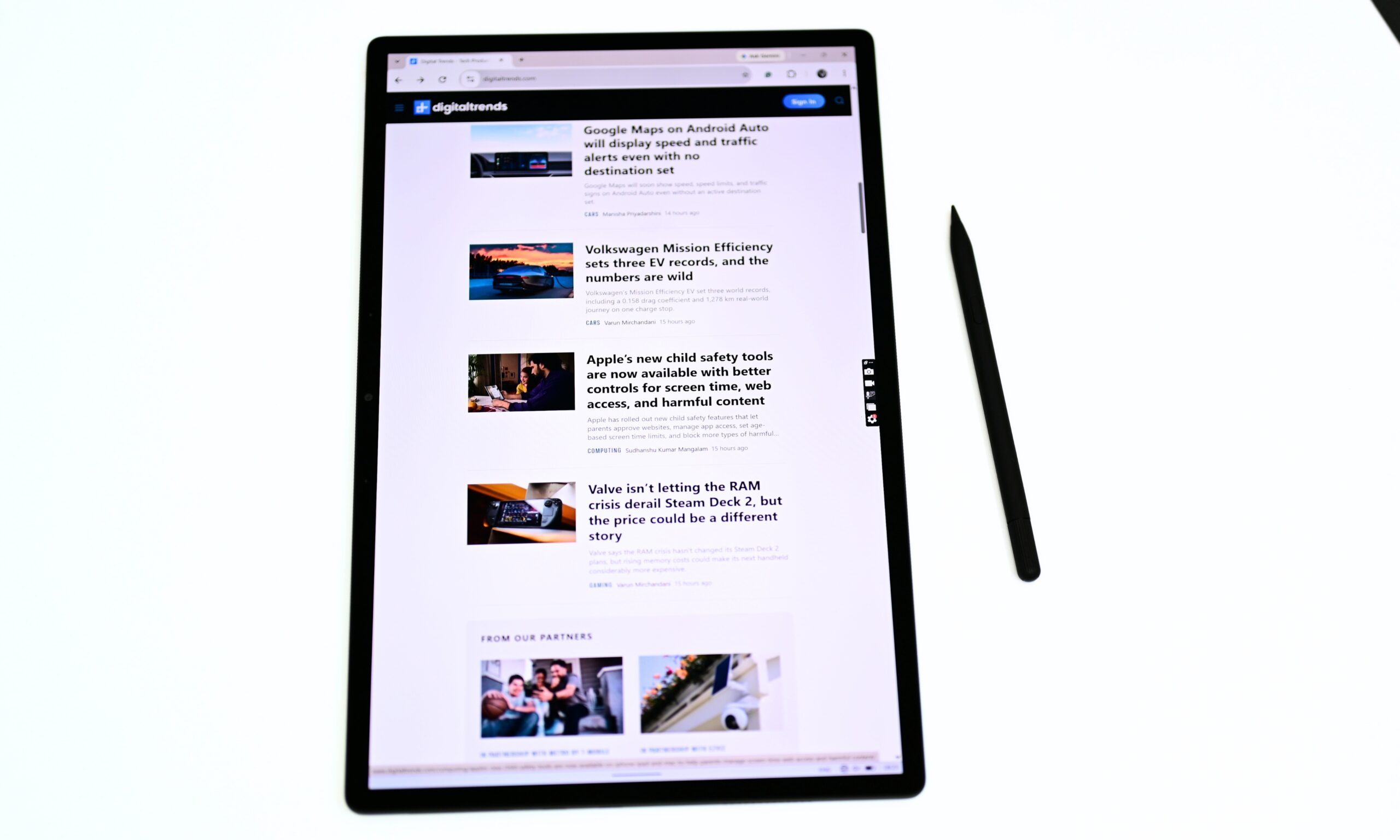
Even so, I loved it indoors and still appreciated it outdoors, even with the reflection caveat. I’ll admit: using my M5 MacBook Air’s screen right after the Asus ProArt PZ14’s felt downright offensive.
Creative professionals should find plenty to like here, too, especially anyone who cares about how their photos, designs, or color palettes look across different displays.
Color accuracy and speakers
The 14-inch OLED screen covers 98% of the P3 color gamut, 92% of Adobe’s RGB color space, and 100% of sRGB. In practical terms, that wide gamut gives you a broader range of colors to work with: DCI-P3 is particularly useful for modern video and photo workflows, while full sRGB coverage keeps everyday web content looking accurate. Adobe RGB coverage matters more for photographers and print-focused workflows.
Asus also claims a Delta E of less than 1, a strong indicator of color accuracy that means the colors you see on the screen should stay remarkably close to the intended colors. If you’re sensitive to flickering, the 720Hz PWM dimming across all brightness levels might bother you.
The device also features two surprisingly capable speakers. With Dolby Atmos support, the output feels immersive and wider than you’d expect from a tablet-like device that is this thin. There’s enough low-end presence to give music and movie soundtracks some weight, while dialogue and vocals stay clear and well-separated.
Volume is more than enough for personal listening or sharing a show with someone nearby. With well-processed, high-quality content, I didn’t notice any distortion either. In fact, I’d go as far as to say that unless you like your music or movies to be really loud, you’re going to end up liking the speakers on the 2-in-1. It punches well above its weight and makes watching content on the OLED screen much more enjoyable.
Display Score: 9.5/10
Asus ProArt PZ14 performance: For my workload, the Snapdragon X2 Elite feels like more than enough
Quick Take: The ProArt PZ14 handled my everyday workload with ease, from dozens of Chrome tabs to photo editing, although its integrated graphics put a ceiling on heavier creative work.
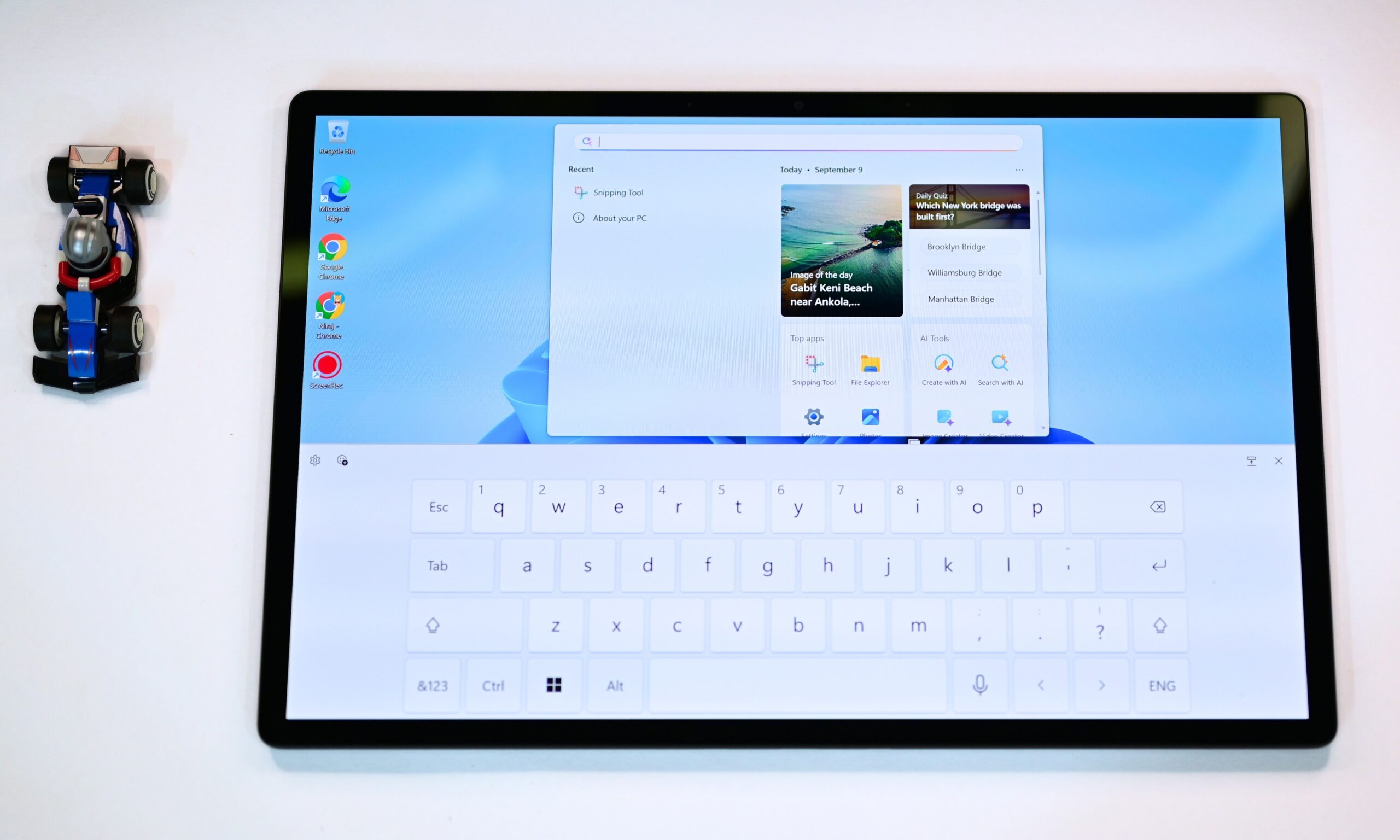
During my limited time with the ProArt PZ14, I treated it like my personal work machine, and it didn’t disappoint me. The Snapdragon X2 Elite (X2-88-100) chip with an 18-core Oryon chip, combined with 32GB of LPDDR5X, never felt underpowered for what I threw at it. For context, my daily use includes running and switching between a couple dozen Chrome tabs, plus Lightroom or Photoshop when I have to edit pictures for reviews.
Day-to-day usage
The ProArt PZ14 felt quite smooth and responsive to me. In fact, switching between multiple Chrome tabs running Teams, Gmail, Docs, Netflix, YouTube, WordPress, Grammarly, and a couple of chatbots at any given point never forced the system to stutter or hesitate.
The machine boots quickly, wakes from sleep almost instantly, Launching apps feels snappy as well.
A few times, though, with a lot of active prompting, I noticed the system lagging for a second or two. If my 13-inch M5 MacBook Air struggles with 50 to 60 active Chrome tabs, this one handles around 30 or 35 perfectly, with no hesitation (without any active chatbots). Even with me using the browser and music playing in the background, everything remained fluid.
Synthetic benchmark performance
Lightroom Classic and Photoshop both opened cleanly and responded without the compatibility headaches that used to plague earlier Windows-on-ARM machines.
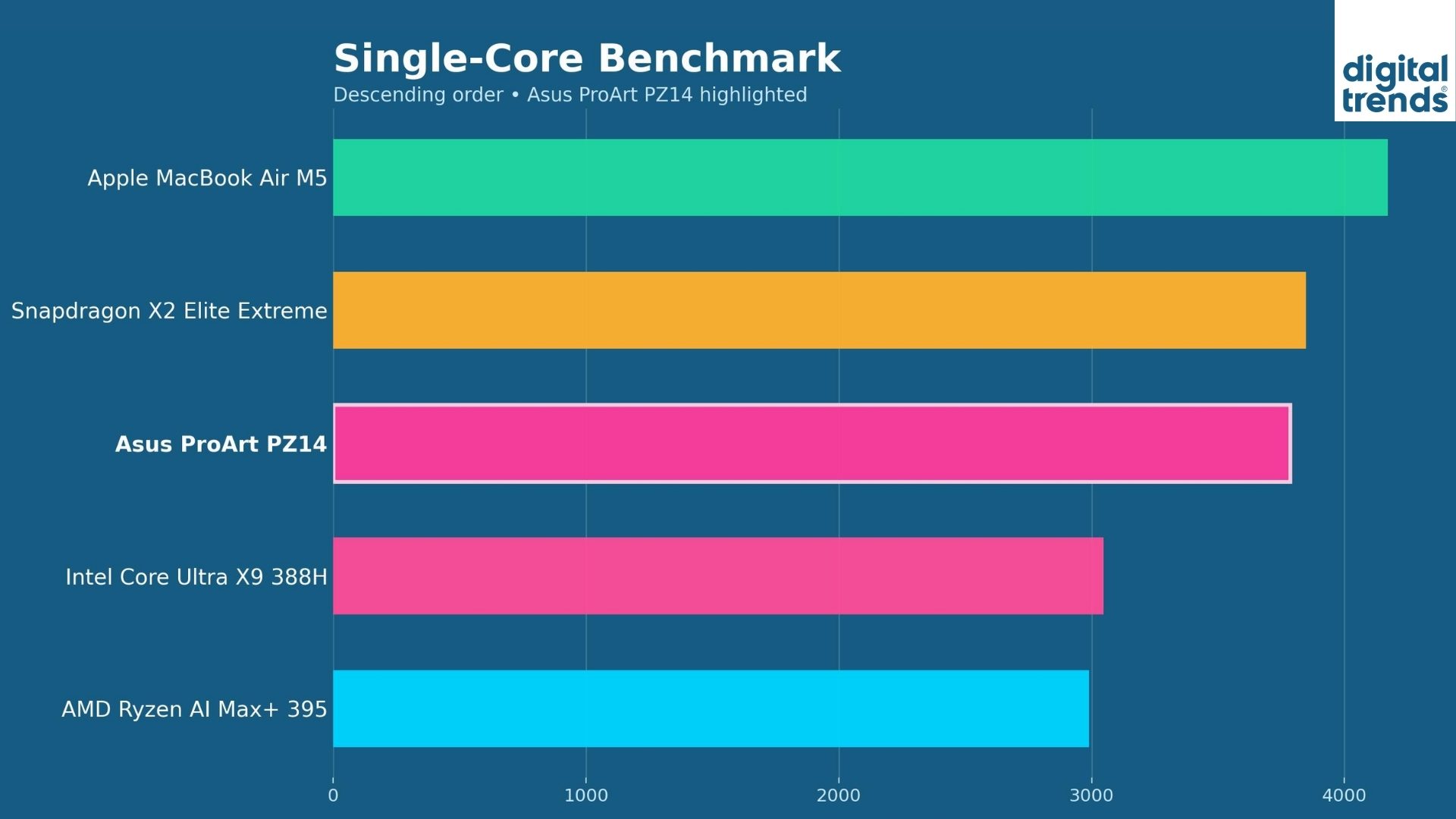
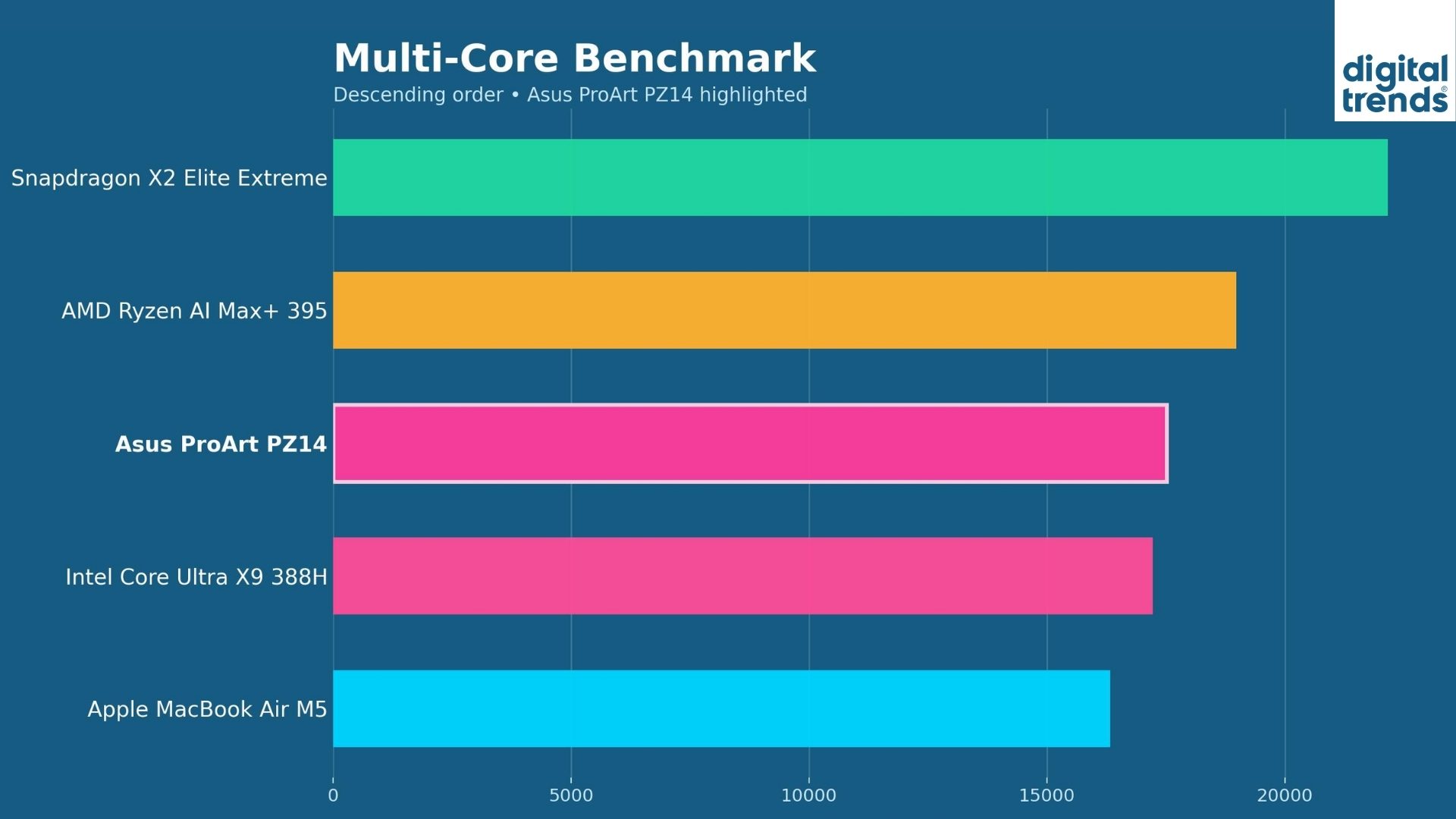
The synthetic numbers, I’d say, lined up with my observations with daily usage. In my own testing, the Snapdragon X2 Elite on the ProArt PZ14 posted 3,784 single-core and 17,521 multi-core on Geekbench 6. In retrospect, that multi-core score sits close to that of the Apple M4 chip.
The multi-core performance is clearly stronger in single-core than the rival Intel or AMD thin-and-light chips with similar power levels.
The internal PCIe 4.0 SSD delivered sequential reads in the 5,800–6,100 MB/s range, which could definitely come in handy while transferring a bunch of edited pictures, videos, or graphics from the device. I couldn’t test the SD Express card reader, though.
Graphics and NPU
Graphics are the clearer compromise. The Adreno X2-90 is a step up from last generation but still sits roughly at the level of Intel’s older Arc 140V. ProArt Creator Hub gives you three power profiles. Whisper kept the fans completely off during light work and was essentially silent. Standard became my daily default. The performance profile is only available when the device is plugged in.
The 80 TOPS Hexagon NPU handled Copilot+ features and Adobe’s generative tools smoothly. In short, the PZ14 delivered the kind of responsive, creator-friendly performance I actually want from a machine that is thin, thin, and light. It won’t replace a high-TDP workstation for heavy multi-threaded video rendering or gaming. However, for everyday productivity, photo work, and light-to-mid creative workflows on the move, it felt more than capable.
Performance Score: 9/10
Asus ProArt PZ14 software: Polished Windows 11 experience with thoughtful Asus extras
Quick Take: Windows 11 feels considerably more polished on the ProArt PZ14, with useful Asus tools and improved ARM app compatibility.
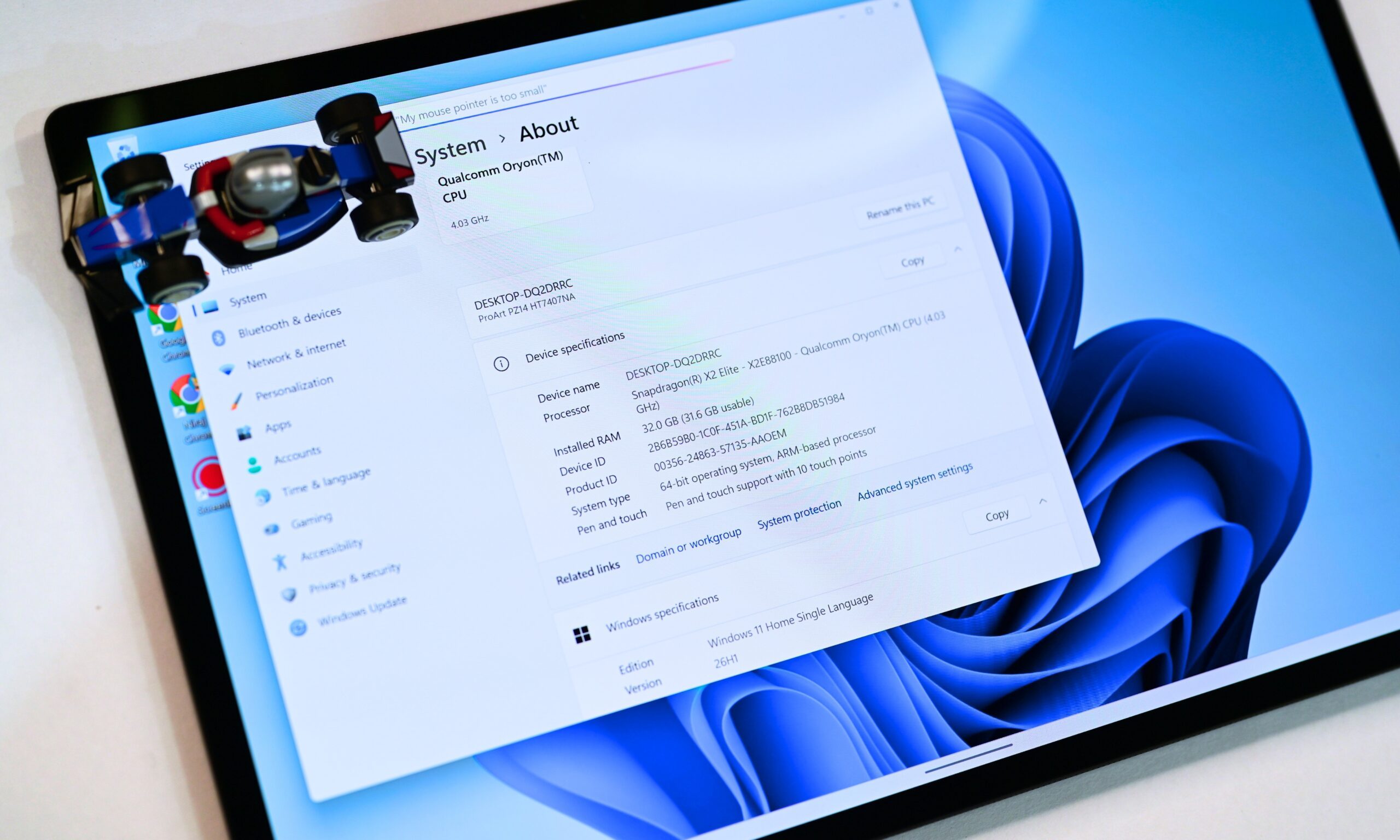
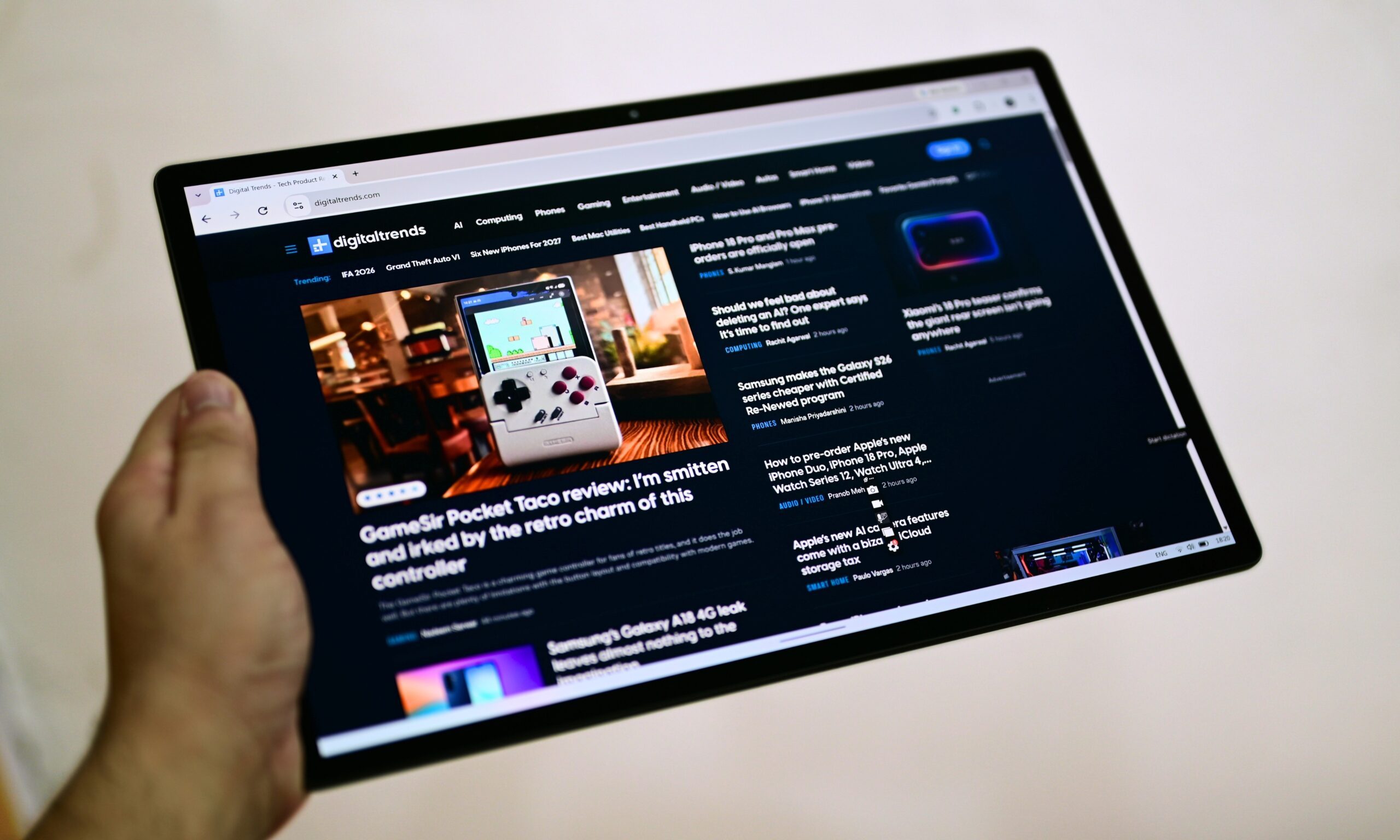
Out of the box, the ProArt PZ14 ships with Windows 11 Home. Day to day, the experience felt clean and responsive. Snap Layouts and the improved multitasking view made juggling browser windows, Lightroom, and reference material noticeably smoother, while the persistent Copilot sidebar stayed out of the way until I actually needed it.
The 80 TOPS Hexagon NPU powers the usual Copilot+ features without drama, and Adobe’s generative tools ran smoothly when I tried them.
Asus-specific software additions
What stood out more were the Asus-specific tools. ProArt Creator Hub remains the central control panel for power profiles, display calibration, and color presets. StoryCube and MuseTree are still there to organize and brainstorm creative work.
Two newer additions proved more useful than I expected: ScreenXpert makes managing multiple displays straightforward, and GlideX lets you wirelessly extend or share the screen with a phone or another PC. Both felt like genuine extras to me.
MyAsus adds the usual suite of practical toggles: Battery health charging, Fan Profile, Splendid color modes, AI Noise Canceling (which pairs well with the dual-microphone array), AdaptiveLock, and a few others. The combination of a firmware TPM and Microsoft’s Pluton security processor, plus IR Windows Hello, also gives the device a stronger security foundation than most thin Windows tablets.
Complementary subscriptions
Asus also includes a handful of complementary subscriptions to get you started: a 3-month Adobe Creative Cloud All Apps trial, Google AI Pro, GoPro Premium+, a Microsoft 365 trial, and Xbox Game Pass. The Adobe trial and Google AI Pro matter most, at least for me. These subscriptions also help you offset the higher asking price.
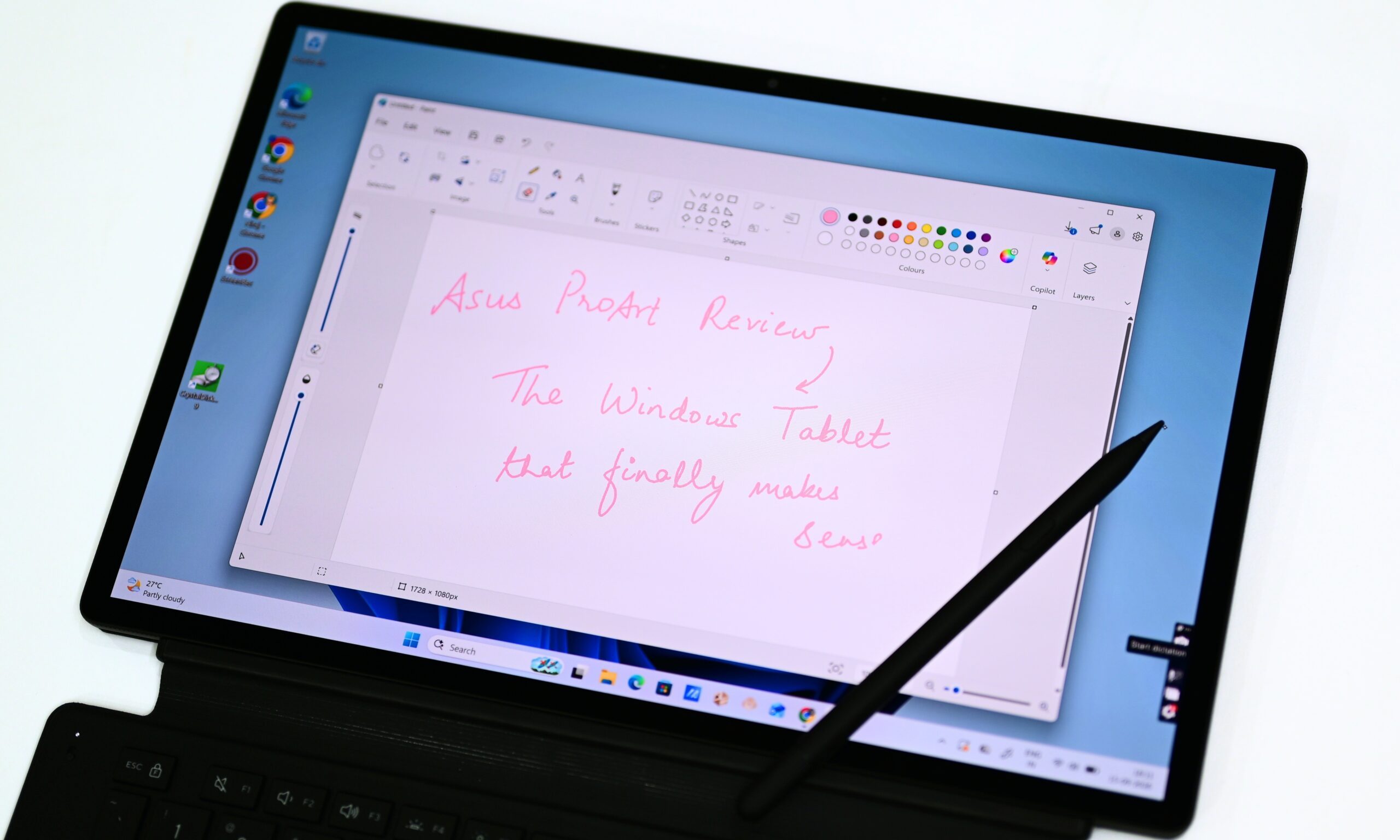
App compatibility has improved enough that everyday creative tools open and behave the way you expect.
The system stays responsive under real multitasking loads, and the experience no longer carries that constant low-level uncertainty about whether something will break or refuse to run. Overall, though, Windows on the PZ14 feels more refined and purpose-built than the awkward ARM Windows machines of a couple of years ago.
Software Score: 8.5/10
Asus ProArt PZ14 battery life: Excellent endurance paired with fast charging
Quick Take: The ProArt PZ14 delivers genuine all-day endurance that feels almost out of place in a device this thin.
The ProArt PZ14 features a 75Wh battery, which isn’t something you’d guess from how thin the device is. Even the thicker 13-inch Surface Pro packs a 52Wh cell, so that’s a clear win for the ProArt PZ14.
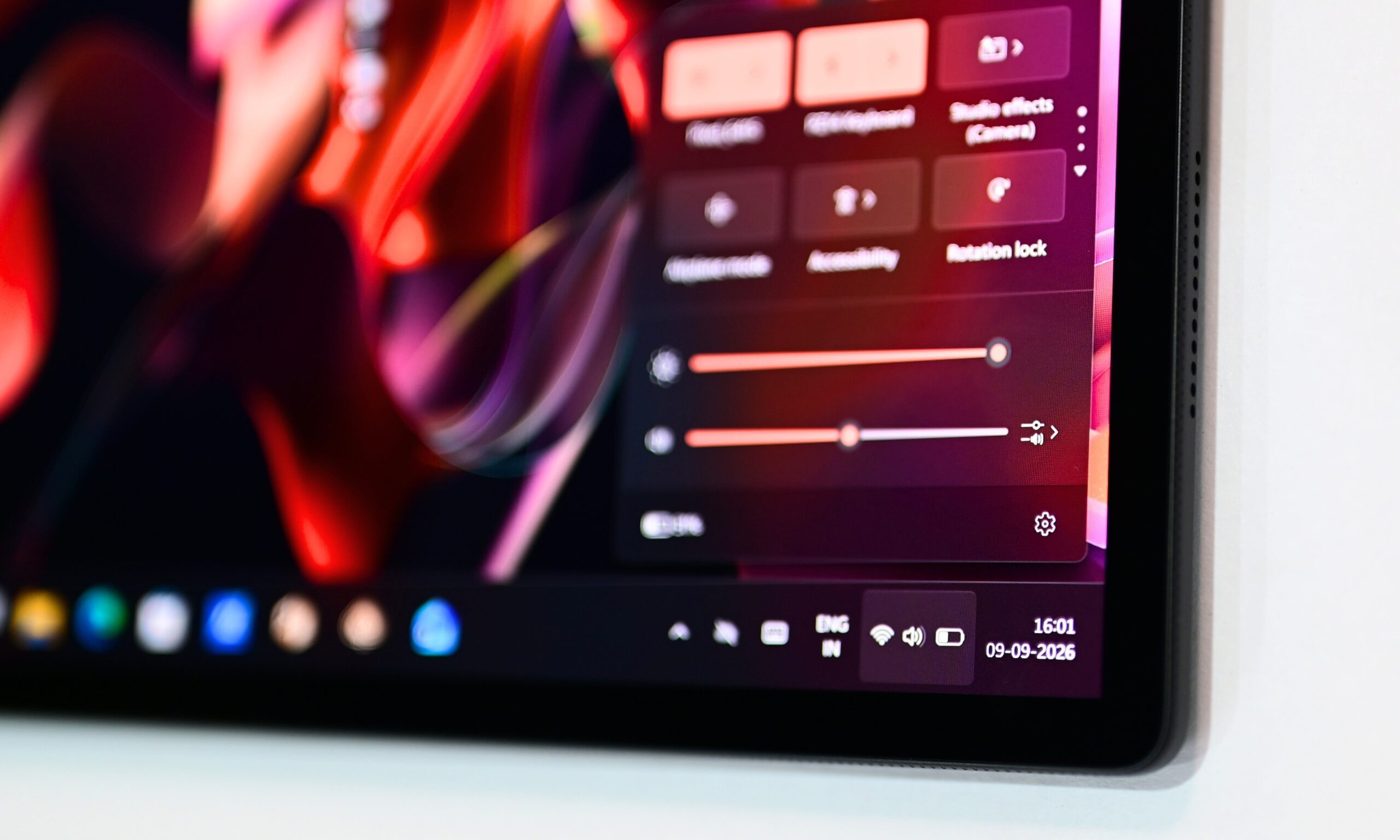
With that relatively large battery, the ProArt PZ14 consistently gave me over 10 to 11 hours of use between charges, with the brightness set at 30-40% and the device connected to Wi-Fi throughout.
What surprised me was how close it came to the battery life I average on my 13-inch M5 MacBook Air with the same workflow.
On days when I’ve used it mainly as a secondary display for research, while playing OTT shows or music in the background, it has even gone beyond that 10- to 11-hour mark. Mind you, this is all at the Standard power profile, with no battery-saving tweaks or changes on my end.
That’s a testament to just how power-efficient the Snapdragon X2 Elite can be. However, with heavy creative usage, the endurance numbers could fall significantly. With back-to-back video rendering or photo editing at maximum brightness, I’d expect the battery to provide around five to six hours of runtime.
And yes, since the device features an OLED panel, pushing the brightness higher can take a noticeable toll on battery life.
The included 68W Type-C charger is where my gripe with the device really lies.
Compared to my MacBook charger, the brick-style adapter that Asus includes with this 2-in-1 is quite bulky and inconvenient to use and carry on a daily basis. It has an AC power cord that plugs into the outlet and an integrated USB-C cable that connects to the device, which makes the whole setup feel unnecessarily cumbersome.
I understand that the device supports 68W fast wired charging, but Asus could have potentially provided a smaller adapter in the box, one that plugs directly into the outlet and lets me use a separate compatible USB-C cable for charging.
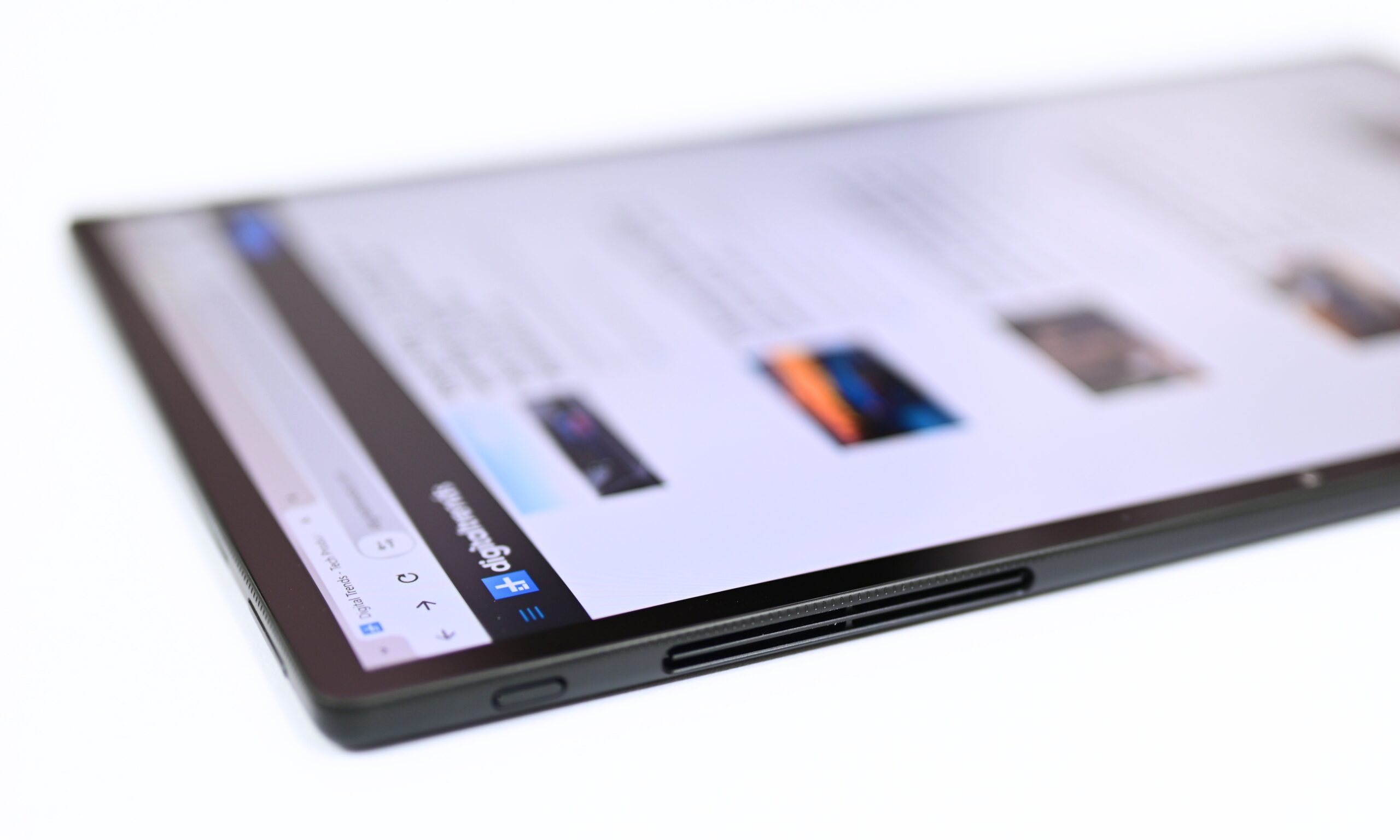
Anyway, the advantage of that charging speed is that you can get the battery from empty to full in around an hour. Overall, battery life is one of the ProArt PZ14’s strongest everyday strengths.
For me, it feels closer to a high-end ultraportable than a typical Windows tablet.
That combination of battery capacity, efficiency, and relatively quick charging makes it far more practical for all-day creative or mobile work than its thin profile would suggest.
Battery Score: 9/10
Should you buy Asus ProArt PZ14?
Here’s one thing that you can’t question the brand for: the price. The Asus ProArt PZ14 is available in a single 32GB RAM and 1TB SSD storage configuration, for which the brand is asking $2,499. However, included in the box is the detachable keyboard attachment, the magnetic kick stand, Asus Pen 3.0 stylus, a protective sleeve, and a 68W power adapter.
Basically, Asus isn’t leaving you high and dry as soon as you get out of the store: all the required accessories are already included in the box. So, besides its use case, the ProArt PZ14 also wins on the value-for-money aspect for me. Just so you know, maximizing the 13-inch Surface Pro (12th Edition) to the same configuration, and getting the optional keyboard and stylus increases your bill to around $3,000.
Keeping the pricing debate to the side, the Asus ProArt PZ14 is one of the most compelling Windows tablets I’ve used in years. If you want a genuinely portable creative machine that can switch from pure tablet to laptop in a second, handles everyday workflows along with photo and light video editing without drama, and delivers all-day battery life, this is the device to consider.
It’s especially well-suited for photographers, designers, and hybrid creators who already live in Adobe apps and want something thinner and lighter than a traditional ultraportable, without giving up a high-quality OLED screen, stylus support, and a usable keyboard. The combination of the Snapdragon X2 Elite, 32 GB of RAM, a vibrant 14-inch 144 Hz OLED, and strong battery life makes it feel more capable and refined than earlier Windows-on-ARM tablets.
Why not try?
- Microsoft Surface Pro (latest generation): If you want the purest Windows tablet experience with better keyboard stability, a more mature accessory ecosystem, and Microsoft’s own software polish, the Surface Pro remains the safer mainstream choice. It’s thicker and heavier than the PZ14, and its display isn’t as vibrant, but the overall package feels more refined as a daily driver for many users.
- 13-inch iPad Pro and Magic Keyboard: If you’re not locked into Windows and prioritize absolute portability, best-in-class display, and a mature tablet ecosystem, the iPad Pro is still hard to beat. It won’t run full desktop Adobe apps the same way, but for many creative workflows it’s faster, lighter, and more polished in pure tablet mode.
- MacBook Air M5 (13- or 15-inch): If you prefer a traditional clamshell design, excellent sustained performance, class-leading speakers, and macOS, the MacBook Air remains the stronger everyday laptop. You lose the tablet flexibility and the higher-refresh OLED, but you gain a more solid typing experience and no ARM compatibility questions.
How I tested
I used the Asus ProArt PZ14 as my main work device for several days, running the same mixed workload I put most premium portables through: heavy Chrome multitasking (Teams, Gmail, Docs, Netflix, YouTube, and AI tools), photo editing in Lightroom Classic and Photoshop, and regular switching between tablet and laptop modes.
I measured battery life during real mixed-use days at 30–40% brightness, and performance checks included Geekbench 6, SSD speeds, and the different ProArt Creator Hub power profiles. I kept my 13-inch MacBook Air M5 nearby as the primary reference for display, responsiveness, and everyday feel.
FAQs
Is the Asus ProArt PZ14al a good laptop replacement?
Yes, though the keyboard isn’t ideal for long typing sessions.
Can the ProArt PZ14 be used as a tablet?
Yes. Its tablet-first design, touchscreen, and included stylus make it genuinely versatile.
Is Windows on Arm reliable on the ProArt PZ14?
Yes. Everyday apps worked smoothly, though some compatibility limitations remain.
How long does the ProArt PZ14 battery last?
Around 10–11 hours with typical everyday use.
Is the ProArt PZ14 good for creative work?
Yes, especially for photography, design, and lighter creative workloads.


