
Few thrillers capture the same unsettling magic as Alfred Hitchcock’s Psycho, but several movies come remarkably close. More than six decades after its release, Psycho remains one of the most influential horror films ever made. Hitchcock’s masterpiece changed audience expectations by killing off its apparent protagonist early, placing viewers inside the perspective of a disturbed killer, and transforming an ordinary roadside motel into one of cinema’s most terrifying locations.
Psycho‘s themes of voyeurism, fractured identity, psychological obsession, and hidden violence helped shape everything from acclaimed psychological thrillers to the modern slasher movie. Critics and historians regularly identify Psycho as a turning point that shifted horror away from traditional monsters and toward the darkness lurking inside seemingly ordinary people.
Psycho constantly manipulates the audience, encouraging viewers to identify with Marion Crane before abruptly shifting sympathy toward Norman. Hitchcock’s use of voyeurism, mirrors, hidden secrets, and unreliable appearances creates a sense of unease that never completely disappears. Several incredible movies explore similar territory. A few directly influenced Hitchcock, while others were heavily inspired by the film’s legacy. Together, they reveal how far Psycho‘s shadow extends across horror and thriller cinema.
Diabolique (1955)

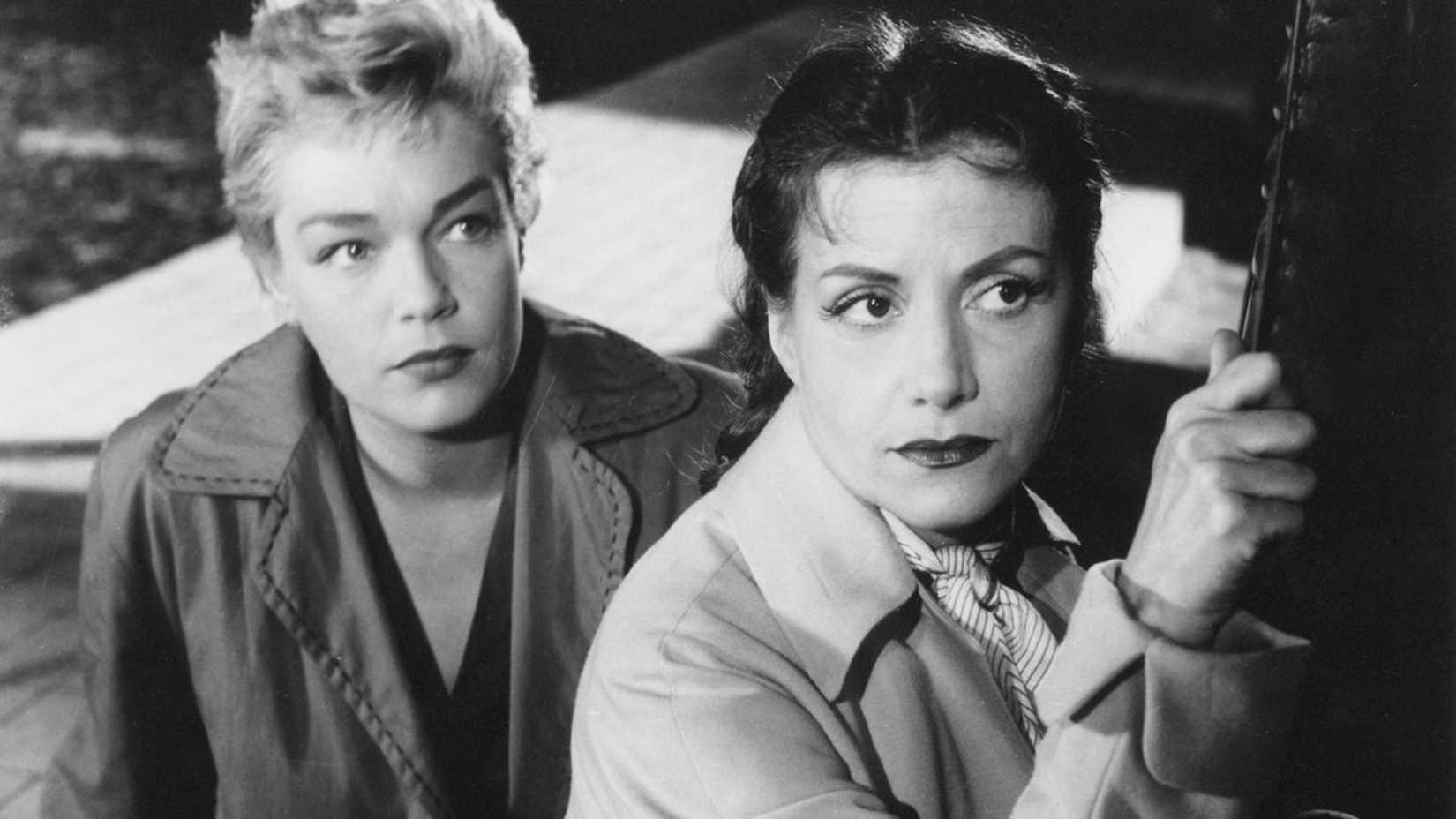
Five years before Psycho shocked audiences, Henri-Georges Clouzot delivered a thriller that Hitchcock himself reportedly admired. Diabolique follows a boarding school headmaster’s wife and mistress as they conspire to murder the abusive man who dominates both of their lives. Their plan appears successful until the body mysteriously disappears.
Both Diabolique and Psycho rely on audience misdirection, carefully constructed mysteries, and shocking revelations that completely reframe earlier events. Like Norman Bates, the central mystery in Diabolique works because viewers become convinced they understand what is happening long before they actually do.
Clouzot also shares Hitchcock’s gift for turning everyday locations into nightmares. The school grounds become increasingly oppressive as suspicion grows, creating the same kind of trapped atmosphere that defines the Bates Motel. Diabolique is one of the most influential psychological thrillers ever made and an essential viewing experience for anyone fascinated by the evolution of cinematic suspense.
Shadow Of A Doubt (1943)

Alfred Hitchcock considered his movie Shadow of a Doubt to be one of his personal favorites, and it’s easy to see why. It feels like a prototype for many of the ideas that would later reach their fullest expression in Psycho. The story depicts young Charlie Newton, who idolizes her charming Uncle Charlie.
When he arrives in her small California hometown, she initially sees him as a glamorous figure who can break the monotony of everyday life. Gradually, however, she begins to suspect that her beloved uncle may actually be a notorious serial killer. Like Norman Bates, Uncle Charlie is terrifying because he appears so normal.
Hitchcock understood that audiences often fear ordinary people more than monsters, and Joseph Cotten’s performance perfectly captures that unsettling contradiction. Shadow of a Doubt also establishes the recurring Hitchcock theme of evil hiding beneath the surface of middle-class America.
Peeping Tom (1960)

Released only months before Psycho, Michael Powell’s Peeping Tom explores many of the same ideas while approaching them from an even more uncomfortable angle. It follows Mark Lewis, a shy cameraman who murders women while filming their final moments, transforming the camera itself into a weapon.
Both Mark and Norman Bates are seemingly harmless men shaped by deeply traumatic childhood experiences. Both films also force audiences into sharing the same disturbing perspective as the killers. Psycho uses Norman’s peephole, while Peeping Tom pushes the concept even further by making the audience’s act of watching part of the horror itself.
Peeping Tom was initially condemned by critics and damaged Powell’s career, but its reputation has grown enormously over time. Today, many historians regard it as one of the defining slasher films of the twentieth century and one of Psycho‘s closest cinematic relatives.
Rear Window (1954)

Hitchcock’s Rear Window explores one of Psycho‘s most important themes: the unsettling relationship between looking and knowing. James Stewart stars as photographer L.B. Jefferies, who spends his recovery from a broken leg spying on neighbors through his apartment window. His harmless voyeurism gradually turns into suspicion that a murder has occurred across the courtyard.
Much of the suspense comes from Jefferies’ uncertainty. He believes he has witnessed evidence of a crime, but proving it becomes increasingly difficult. The audience experiences every discovery from his perspective, creating the same kind of subjective tension that makes Psycho so effective.
Just as Psycho transforms the Bates Motel into a pressure cooker of anxiety, Rear Window turns a single apartment complex into an endlessly fascinating puzzle. It is one of the director’s finest achievements and an essential companion piece to Psycho.
Scream (1996)

Wes Craven’s Scream is often celebrated for reinventing the slasher genre, but it also contains one of the clearest tributes to Psycho ever filmed. Like Hitchcock’s classic, Scream immediately shatters audience expectations by killing off its major star early in the story. Drew Barrymore’s shocking opening death echoes Janet Leigh’s abrupt exit from Psycho.
Beyond that famous similarity, both films are fascinated by audience assumptions. Psycho encourages viewers to think they understand its story before completely changing direction. Scream constantly plays with slasher conventions, exploiting the audience’s familiarity with genre rules.
The killers themselves also reflect Psycho‘s influence. Behind Ghostface’s costume are deeply damaged individuals whose motivations emerge through psychological revelations rather than supernatural explanations. The horror comes from people, not monsters. For viewers interested in tracing Psycho‘s influence on modern horror, few movies provide a clearer example.
The Night Of The Hunter (1955)

Charles Laughton’s The Night of the Hunter is one of the strangest and most haunting thrillers ever made. Robert Mitchum stars as Harry Powell, a murderous preacher who marries a widow in hopes of finding stolen money hidden by her late husband. Like Norman Bates, Powell presents a friendly face to the outside world while concealing terrifying darkness beneath the surface.
Mitchum’s performance is unforgettable. His calm voice, religious rhetoric, and unsettling confidence create a villain who feels simultaneously human and mythic. He is not mentally fractured like Norman, but both characters embody the idea that evil can disguise itself as ordinary kindness.
The dreamlike visual style in The Night of the Hunter also anticipates some of the psychological qualities that would later define Psycho. Shadows stretch across walls, landscapes feel unreal, and danger seems to emerge from every corner of the frame.
The Tenant (1976)

Roman Polanski’s The Tenant explores identity and psychological disintegration in ways that Psycho fans will find immediately compelling. The story depicts Trelkovsky, a quiet man who rents an apartment previously occupied by a woman who attempted suicide. As he settles into his new home, he becomes increasingly convinced that his neighbors are trying to transform him into the apartment’s former occupant.
The audience is never entirely certain whether the conspiracy Trelkovsky perceives is real or a symptom of mental collapse. That uncertainty creates a constant atmosphere of paranoia. The Tenant also shares Psycho‘s fascination with identity.
Norman Bates gradually loses himself within another personality, while Trelkovsky struggles to maintain his own sense of self against mounting external pressure. Polanski’s direction amplifies every uncomfortable detail. It’s a deeply unsettling experience and one of the strongest examples of psychological horror from the 1970s.
The Silence Of The Lambs (1991)

Few thrillers have matched Psycho‘s cultural impact, but The Silence of the Lambs comes remarkably close. Jonathan Demme’s Oscar-winning film follows FBI trainee Clarice Starling as she seeks help from imprisoned cannibal psychiatrist Hannibal Lecter while hunting serial killer Buffalo Bill. It combines procedural investigation with psychological horror, creating a uniquely intense experience.
Psycho‘s influence appears throughout The Silence of the Lambs. Buffalo Bill, like Norman Bates, is a deeply disturbed killer whose crimes stem from complex identity issues. Both were also inspired by real-life murderer Ed Gein.
Lecter’s exchanges with Clarice create extraordinary tension, much like some of Psycho‘s most revealing scenes involve Norman simply talking with Marion. Similarly, Anthony Hopkins and Jodie Foster elevate every scene they share, producing one of the greatest character dynamics in thriller history.
Carnival Of Souls (1962)

Carnival of Souls occupies a unique place in horror history. The story concerns Mary Henry, a woman who survives a car accident and begins experiencing strange visions while becoming increasingly disconnected from the world around her.
Mary’s encounters with a mysterious pale-faced figure create a sense of creeping unease rather than conventional terror. Like Psycho, Carnival of Souls relies heavily on psychological uncertainty. Viewers spend much of the story questioning what is real, what is imagined, and whether Mary’s perceptions can be trusted.
Carnival of Souls also demonstrates how effective atmosphere can be when used carefully. The abandoned carnival pavilion feels almost as iconic as the Bates Motel, serving as a physical manifestation of the film’s unsettling themes. Its dreamlike imagery influenced generations of horror filmmakers, and its emphasis on psychological dread makes it a natural recommendation for Psycho fans.
Halloween (1978)

John Carpenter’s Halloween is perhaps the most important descendant of Psycho‘s legacy. Psycho helped establish many of the narrative and visual techniques that later became staples of the slasher genre, and Halloween refined those ideas into a new form.
Both films derive terror from seemingly ordinary settings, with Michael Myers transforming suburban streets into terrifying hunting grounds. The familiarity of those environments makes the violence even more disturbing. Like Hitchcock, Carpenter frequently allows tension to build through careful framing, point-of-view shots, and anticipation.
Audiences spend much of Halloween scanning the background for signs of Michael’s presence, creating a constant sense of anxiety. Jamie Lee Curtis is another direct connection. As the daughter of Psycho star Janet Leigh, her casting feels like a symbolic passing of the torch between two slasher eras, directly building on Psycho’s impeccable foundation.

- Release Date
-
June 22, 1960
- Runtime
-
109 minutes
-

Anthony Perkins
Norman Bates
-