

Business
Data science helps determine who receives betting incentives, but the company has resisted using similar technology to protect gamblers at risk of addiction.

About a year into his job as a data analyst at DraftKings, Jayden Butts received a new assignment.
The online gambling giant was spending hundreds of millions of dollars every year on promotional incentives: “free” betting money advertised through emails and phone alerts. But the company knew little about their effectiveness.
So in 2023, DraftKings took customer betting records and built a machine learning model, a form of artificial intelligence that seeks patterns in data, to answer the question: Who was more likely to respond to promotions by gambling — and losing — more?
Butts’ task was to test that model, prioritizing free bets and bonuses for those likely losers. Soon, a question began to gnaw at him: Aren’t many of these same people prone to addiction? “We are looking for traits and features that we can target that indicate a good investment,” he said. By strict financial logic, “the best investment would be a problem gambler.”
Butts had reason to be concerned. DraftKings makes money when gamblers lose money. And the model sought to identify those it could get to lose the most. It scored each customer based on their habits: The higher the score, the more money a gambler was likely to lose for each promotion offered.
Since Butts ran those tests, DraftKings has continued to hone its methods, using data science, to target losing gamblers with promotions that encourage more betting, according to six former employees who worked on them. At the same time, four other former employees said, DraftKings has stalled or squashed efforts to use similar technology to predict who might develop a gambling problem based on their betting activity.
Silicon Valley firms spent years analyzing every digital interaction to predict what will keep users clicking on advertisements. Now, as companies like DraftKings have made gambling accessible to millions on smartphones, they too have collected an extraordinary wealth of data.
An investigation by The New York Times shows what DraftKings has chosen to do — and not do — with that power.
The Times interviewed more than 40 former DraftKings employees and obtained internal research memos, presentations and Slack messages as well as betting records from experiments conducted on customers.

The documents show how the model Butts worked on analyzed dozens of data points for gamblers, including how frequently they played, their daily account balances and how much they typically lost compared with how much they bet. It also incorporated another model that calculated how likely a user was to stop gambling.
This betting data may also contain signs that a person is headed for trouble. Yet when employees developed a machine learning model that would have assigned users “risk scores,” the company sidelined it, according to two former employees who worked on that project.
In late 2024, DraftKings fired Butts for performance reasons, he said, amid a short blip in business that led some in the company to believe its promotional experiments weren’t working as intended. The company briefly paused some of its data science work — before revving back up again with a flurry of new machine learning projects.
Butts and five other former DraftKings employees who worked on promotional targeting told the Times they regretted building technology they now viewed as dangerous.
“It is as predatory as it sounds,” said a former DraftKings analyst who, like many interviewed for this article, requested anonymity because he feared retribution. “If you lose more, we give you more, so you keep playing more.” He quit in 2024.
In a statement, DraftKings said it “rejects any implication that its marketing practices are unfair or improperly targets customers.” The company disputed how some former employees characterized its use of promotions, saying they are “directed toward customers who demonstrate sustained, engaged use of our platform, not toward customers based on their losses.” It also said it disagreed with Butts’ account of his firing but did not elaborate.
Lori Kalani, who as DraftKings’ chief responsible gaming officer leads the company’s efforts to prevent problem gambling, said in an interview that its business depended on “customers who are betting within their means, are betting for entertainment and betting for fun.”
Kalani said DraftKings did monitor customers for “potentially risky behaviors.” But she acknowledged that the company had declined to use risk prediction technology, saying there wasn’t evidence that it was helpful.
In 2018, when the Supreme Court ruled that states could legalize online sports gambling, it ushered in a new era in which betting has moved beyond casinos and racetracks. Professional sports games are now saturated with celebrity advertisements, encouraging people to wager on their phones.
DraftKings and its rival FanDuel dominate this new industry, which has expanded into online casino games and, more recently, prediction markets. DraftKings says it has 11 million customers, compared with 5 million in 2022.
Health experts have long recognized gambling as addictive, but many critics see this modern version, where people can bet from their couch on the outcome of a single baseball pitch, as especially dangerous. A study published last year in JAMA Internal Medicine cited a rise in Google searches like “Am I a gambling addict?” Calls about sports betting to Ohio’s problem gambling help line have more than quadrupled since the state legalized it in 2023. The state’s departing governor, Mike DeWine, told the Times that signing that law was his biggest regret.
Promotions, which take on forms like a free bet, a “profit boost” or a deposit bonus, play a vital role in DraftKings’ business: The company brought in around $8.7 billion in gross revenue from sports and casino gamblers last year and gave out about $3 billion in promotions, according to research by Citizens Bank.
DraftKings and some competitors, including FanDuel, have boasted publicly about their use of customer data for promotions — without disclosing what those efforts entail. A DraftKings executive recently told investors that data science and analytics helped it improve its margins on promotion-driven sports bets by 13% in 2025 and that it used AI to personalize hundreds of millions of promotional dollars.
One former DraftKings data scientist who worked on promotions, Jacob Shulkin, said that they were effective because they took advantage of gamblers’ psychology. “I feel I’m getting free money,” he said, “but really, it’s dragging me back in.”
Several gamblers told the Times that promotions fueled their addictions. Bryan Biehl lost nearly $70,000 gambling online, more than half of it at DraftKings. Biehl recalled how in late 2024, when he started therapy for his addiction, his email inbox began to feel like a relapse risk.
“I would get flooded with bonuses and deposits,” Biehl said. “If you are in addiction, you are not going to say no.”
In the first two weeks of December 2024, Biehl received 40 promotions from DraftKings, emails show. He succumbed to temptation one last time on Christmas Day before putting himself on self-exclusion lists, which blocked him from gambling apps.
DraftKings declined to comment on Biehl’s account.
Asked whether promotions contribute to problem gambling, Kalani said they were “a marketing tool that every company out there uses,” comparing DraftKings to businesses like Amazon. Other industries face similar issues, she said. “Shopping can be problematic for people.”
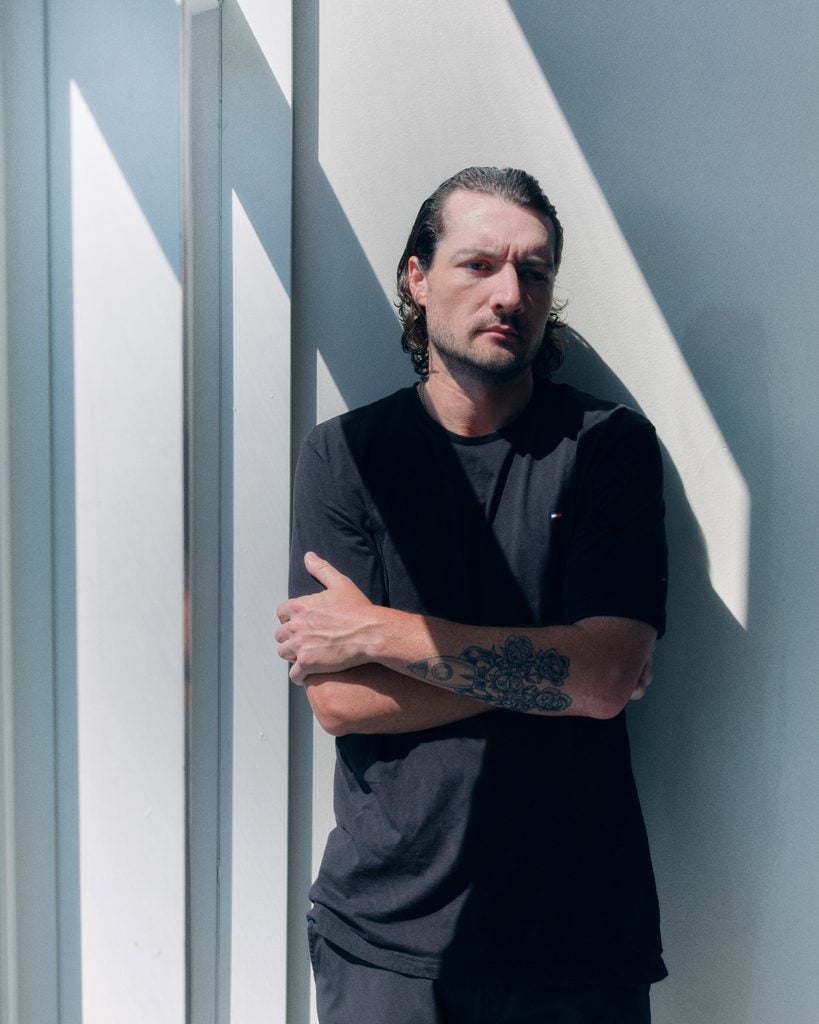
Butts grew up watching his grandfather’s gambling addiction play out — three trips a week up Interstate 95 to Oxford Casino in Maine.
Fresh out of college and eager for a high-paying tech job, he joined DraftKings’ casino division in May 2022 as a data analyst. He initially didn’t think much about customers like his grandfather. Then he had his own string of losses playing online slots through an offshore website. He later quit gambling, with a new appreciation for people who might be struggling.
DraftKings is famous for sports betting, but its online casino games, including slots and blackjack, bring in nearly one-third of the company’s revenue, even though it offers them in only a handful of jurisdictions.
The online casino is where, in mid-2023, DraftKings set out to build a model for predicting how promotions would translate into a user’s eventual wins or losses.
The core question was, “Is this person going to give us more than we’re giving them?” Butts said. “And if the answer is yes, open the floodgates.”
DraftKings already had a system that weighed factors like a gambler’s skill, how much they bet and tax rates on gambling revenue in the state where they lived.
But it was relatively crude. According to one internal memo, it offered “no information or insight on expected user-level profitability of reinvestment dollars”; in other words, DraftKings did not know how effective its promotions were at inducing gamblers to lose.
Figuring this out required machine learning. Unlike traditional data analytics, where researchers decide which patterns to look for, machine learning models can sift through hundreds of variables on their own to find combinations that help predict particular behaviors.
Data scientists had trained the new casino model on historical data. It was Butts’ job to test it on real customers. Each week, the model vacuumed up information about a user’s recent activity. The score it calculated was known internally as “elasticity,” a term borrowed from economics.
Users with below-average scores were deemed “inelastic” and marked for fewer incentives. The “elastic” bettors remained.

In September 2023, Butts tested using the elasticity model to influence promotions for about 5,000 casino players. He later expanded the tests to a larger population.
He initially thought DraftKings aimed to save money by avoiding people who were unlikely to be profitable. But he said his supervisors told him that the company did not want to reduce its promotional spending but rather to “redeploy” it. He understood this to mean the goal was to direct more promotions toward the biggest losers.
Butts said he also worried that his experiments might lead DraftKings to send more promotions to players who played more addictive games, including his own former vice: online slots, widely regarded by public health experts as among the most addictive forms of gambling.
It’s not clear the extent to which DraftKings has targeted slots players more than others. But in a 2023 internal memo, researchers reported that slots revenue was “more elastic” than earnings from other casino games, meaning that promotions were particularly effective at driving users to those games. A Times analysis of internal DraftKings casino betting data from early 2024 also found that bettors with high elasticity scores gambled more on slots, on average, than those with low scores.
DraftKings said that it could not provide a “definitive response” to Butts’ tests, the 2023 memo or the Times analysis because it had not “seen or verified” the material. But it said that Butts’ test “appears preliminary and inconclusive,” and that his views did not “reflect DraftKings’ approach to promotional investment.”
Around the same time that Butts ran his tests, DraftKings began building similar models for sports betting promotions, according to eight former employees. It has continued to develop techniques for targeting sports and casino bettors as recently as this year.
One former employee said he had worked on a system that looked for people at risk of leaving the platform and tried to coax them back. Another said he helped develop a program that ramped up promotions for people gambling more aggressively than usual.
Two other former analysts who worked on targeting projects told the Times that they independently raised concerns with their superiors that these models would identify vulnerable gamblers as promotional targets, and asked to put protections in place.
Both received the same response: no. That would be handled by another part of the company, they said they were told.
Kalani, DraftKings’ responsible gaming head, said she was not familiar with those requests.
Onus on the gambler
The job of limiting problem gambling at DraftKings largely falls to its responsible gaming division, a group of around 50 employees at the 5,000-person company.
DraftKings offers a variety of tools for gamblers who need them. Its advertisements feature phone numbers for 24/7 gambling help lines. “Cool-off periods” let people turn off access to the app for up to a year, and those with a longer-term problem can put themselves on self-exclusion lists for years — or indefinitely.
Gamblers with a high degree of self-awareness may find these tools helpful. But they put the onus on the gambler. “When someone is struggling with an addiction, a rational suggestion that this is not in your best interest is falling on deaf ears,” said Mark Gottlieb, a lawyer who has sued DraftKings and other internet gambling companies, accusing them of practices that lead to addiction.
Although many at DraftKings feel proud of their work to protect problem gamblers, their efforts have created friction with the wider business, according to six former employees who worked on responsible gaming projects. One described the responsible gaming group as “at odds with the rest of the company,” because it aims to slow gamblers down, which in turn makes them less profitable for DraftKings.
DraftKings said there was “no tension” between its business goals and its responsible gaming efforts.
But Hassel Velasco, a former member of DraftKings’ customer service team, told the Times that on about a dozen occasions, he heard complaints from problem gamblers who continued to receive promotions.
“It pushes people to almost chase their losses,” Velasco said. “They’re going, ‘Oh, I’m getting a bonus, so I can make up whatever I lost.’” Troubled by these conversations, Velasco struggled to sleep. He quit in 2024 after five months on the job.
DraftKings said its representatives were required to report problem gambling concerns to the company. Kalani said the company did not send promotions to bettors who had been flagged or who had taken themselves off the platform.
DraftKings does monitor for vulnerable customers, even if they don’t reach out for help. DraftKings follows guidelines from New Jersey regulators, who have instructed operators to set automatic triggers for specific indicators of potentially reckless betting, such as a customer depositing more than a certain amount during a set time period or a notable spike in time spent gambling.
DraftKings said that it did this nationwide, watching for more than two dozen such indicators. The company declined to share the thresholds it uses to prompt a response — how much someone would have to deposit, for instance — “because doing so could enable customers to circumvent our systems.”
When a customer trips one of these triggers, DraftKings can take three escalating steps. It first sends a message about responsible gaming, then an educational video and finally a questionnaire about gambling habits. Sometimes, DraftKings will close a gambler’s account.
But there are limitations. Intervention is based on customers demonstrating a specific behavior, and even if that happens, they can deny that they have a problem.
DraftKings described the system as “advanced technology” and said that it allowed the company to reach out to gamblers who had not yet asked for help. The company declined to share how many accounts it had suspended using this system.
A collision course
Inside DraftKings, some employees believed the company could go much further.
One was a data scientist named Nestor Hernandez, who in mid-2024 began building a system that would help the responsible gaming division identify gamblers in trouble.
Hernandez, who holds a doctorate in computer science, had spent years using algorithms to detect unusual patterns in large amounts of data.
He reviewed academic research into problem gambling, then developed a machine learning model to analyze the betting records — the same used for promotional targeting — of customers the company had already flagged for risky behavior.
His model scanned, among other things, deposits and withdrawals, attempts to chase losses and even age and gender for patterns that might anticipate a gambler’s impending crisis. The risk score it assigned each user could theoretically help the company step in early with warnings or an outright ban.
“The idea of this model is to be more proactive instead of being reactive,” Hernandez said. “You will basically predict that a user will be in trouble, let’s say, a few days or a few weeks in advance. And you can act accordingly.”
Hernandez left the company that November for personal reasons, his model still unfinished. A new team of data scientists continued the work. Just a few months later, he received news from two former colleagues: The project had been shut down.
One member of that team was Jake Shannin. “Our conclusion was that it is possible even with simple rules to get a better-than-guessing sense” of whether a customer would end up needing an intervention, Shannin said.
In early 2025, Shannin said, the team prepared to share the new model with company officials, including Kalani. But the day of the presentation, the meeting was canceled. Two other attempts by DraftKings employees to build similar algorithms have also been shelved, according to two former employees.
Kalani said that company leaders made a “collective decision” not to use predictive technology for problem gambling. “We evaluated that it wasn’t evidence-based,” she said. The company decided that its existing system was a “better methodology.”
Several third-party firms offer their own versions of risk scoring. Other gambling companies say they have signed up for this, including two of DraftKings’ largest rivals, FanDuel and Fanatics.
Phil Sherwood, senior director of responsible gaming at PrizePicks, another competitor, said his company had a “moral obligation” to use these tools. “Frankly, without technology like this, I can’t look you in the eye and say, ‘We’re doing our best,’” he said.
DraftKings does not use any of these tools. “We’re always considering our options,” Kalani said. The company said its “primary commitment is to approaches that demonstrably help customers, not simply to adopting technology for its own sake.”
DraftKings shared one example of its using AI for responsible gaming: It deploys large language models, the technology behind chatbots like ChatGPT, to monitor communications from gamblers to company representatives for signs of distress.
But the technology cannot flag customers who say nothing.
This article originally appeared in The New York Times.