


Whether a dinner-table thought experiment or the basis for a historic epic, the concept of time travel has fascinated writers, artists, and audiences for decades. Contemplating human history and future potential has created some of the most interesting and enjoyable films, television shows, and books of the last century.
Explorations of time travel, though fantastical in nature, appear in stories across genres and mediums, uncovering and re-exploring what it means to exist as a human in time. Authors like Stephen King, Diana Gabaldon, and Emily St. John Mandel tackle the topic over and over again, wrestling with what it means to be alive. Whether sci-fi dystopia or contemplative literary fiction, time travel gives authors a way to examine how people are shaped by the eras they inhabit—and what happens when those boundaries fall away. The best novels with time travel make their imagined worlds feel convincing while giving readers something to consider about their own: the choices they regret, the histories they inherit, and the futures they hope to create.
The Time Traveler’s Wife (2003)
Audrey Niffenegger

Audrey Niffenegger’s The Time Traveler’s Wife is a heavy read, but entirely worth it. The novel follows the love story of librarian Henry DeTamble and artist Clare Abshire as they navigate Henry’s rare genetic condition that causes him to involuntarily travel through time. Henry cannot choose when or where he travels, and he cannot rewrite events that have already happened. Knowing what comes next offers little protection from it.
That constraint is what makes The Time Traveler’s Wife one of the best time travel novels. Niffenegger uses its non-linear structure to show how differently two people can experience the same relationship, as their shared history is never quite shared in the same order. As the novel moves between their perspectives, time travel becomes less a way to explore the past or future than a way to examine what it means to love someone you cannot always reach or keep safe. The result is a character-driven story about fate, free will, and the limits of what love can overcome.
Sea of Tranquility (2022)
Emily St. John Mandel

With plots that span centuries, sometimes the most interesting reflections are those of the present moment. In Emily St. John Mandel’s Sea of Tranquility, time travel is embedded into the book’s universe, as characters scattered across time and space must reckon with the past mistakes of previous time-travel ventures. Characters from different centuries are connected by a shared sensory glitch that
While a sci-fi and fantasy novel, The Sea of Tranquility is uniquely grounded in this contemporary era, exploring many of the real-life events and well-known conspiracies of today. Though the novel stands alone, many of the characters in Sea of Tranquility reference or appear in Mandel’s 2020 novel, The Glass Hotel.
Mandel’s ability to connect the intimate and the immense makes Sea of Tranquility especially compelling. Its questions about the nature of reality unfold alongside familiar experiences of loneliness, ambition, and longing for home, giving its speculative premise an emotional weight. Even as the novel moves centuries beyond our own lives, its characters remain recognizable. That balance makes its reflections on time and existence accessible without sacrificing the complexity of the ideas behind them.
11/22/63 (2011)
Stephen King

In a divergence from the typical thrills from the king of horror, Stephen King’s 11/22/63 reckons with the weight of the United States’ history, and what might happen if someone were to go back and change it.
11/22/63 follows Jake Epping, a divorced high school teacher from Maine, who discovers a portal that will transport him back to September 9, 1958. Under the advisement of his best friend’s dying wish, Jake goes back in time to prevent the November 22, 1963 assassination of John F. Kennedy, believing it will bring a better future. Clocking in at 849 pages, 11/22/63 is a momentous unwinding of the butterfly effect, examining how just one decision can change everything.
What makes 11/22/63 stand out is the tension between Jake’s historic mission and the ordinary life he begins to build in the past. His relationship with Sadie Dunhill gives him a personal stake in an era he initially approaches as something to fix. King makes the temptation to change history feel understandable, then complicates the assumption that knowing the future means knowing what is best. Its ambitious premise becomes a deeply affecting examination of responsibility, attachment, and unintended consequences.
Outlander (1991)
Diana Gabaldon

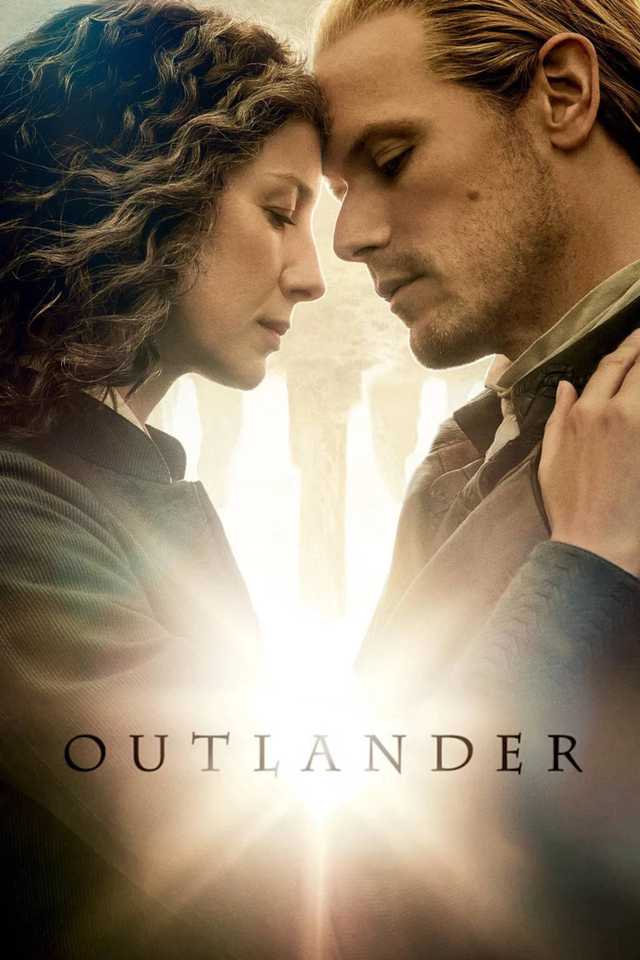
For the historical romance fan, Outlander is unmissable. While on her second honeymoon in Inverness, WWII nurse Claire Randall finds herself transported 200 years back in time, and thrust into the shifting world of the Highland Scottish Clan MacKenzie, circa 1743, and an epic romance with Highlander Jamie Fraser.
The Outlander series unfolds over the course of nine books, which have since been adapted to television with the eight-season Outlander show on Starz, which concluded in May 2026. Outlander’s dedicated fanbase is proof of its merit as a heart-pounding historical romance fantasy, begging the question: across time and space, how different could we be?
Gabaldon makes time travel compelling through Claire’s perspective, allowing readers to encounter the eighteenth century through someone whose knowledge and expectations resemble their own. Her medical experience offers practical advantages, while her assumptions about independence and authority create friction with the world around her. This tension gives the historical setting an immediacy that helps distinguish Outlander: readers experience the past as a place Claire must learn to inhabit, with consequences for both her survival and her sense of self.
Kindred (1979)
Octavia E. Butler

In some cases, time travel is the catalyst of confrontation. Octavia E. Butler’s 1979 novel Kindred brings a contemporary Black woman from her home in 1970s Los Angeles back to the Antebellum era of United States history, imagining how a modern woman would react to the conditions of enslaved people during the 19th century.
Kindred challenges the standard retelling of American history—one that often omits the stories of life under slavery. Butler’s work is considered a classic by many, having often been chosen for syllabi across high school and university courses. Kindred is genre-bending and expansive, challenging how many may perceive the annals of their national past.
Butler’s use of time travel makes historical distance impossible to maintain. Dana’s knowledge of the future offers limited protection against a society built to deny her autonomy, challenging the comforting assumption that a modern perspective would make navigating the past straightforward. The novel’s power lies in how relentlessly it tests that assumption. By making history a physical and psychological experience, Kindred forces readers to consider the conditions under which people survive—and the lasting costs of that survival.
The Midnight Library (2020)
Matt Haig

If you could go back and do it all again, what would you change? Matt Haig takes on the uniquely human pursuit of perfection in his 2020 novel The Midnight Library, a 300-page rumination on life, death, and regret.
In the space between life and death, Nora Seed finds herself in the midnight library, where she has the chance to see how each of her decisions shaped the life she lived—and how a different choice could send her down a completely different path. Nora decides to change everything—hoping that a different life might subside her perpetual state of dissatisfaction and woe. The Midnight Library offers a reflective and philosophical take on the classic time travel paradox—one where endless revisions of the past might not guarantee happiness.
Though its premise centers on alternate lives, The Midnight Library belongs in the broader conversation about fiction that explores changing the past. Haig gives the familiar question of “what if?” a structure readers can readily imagine, then examines how little anyone knows about the lives they believe they should have lived. Its appeal comes from that recognizable impulse: Nora’s search invites readers to reconsider their own regrets and the certainty with which they judge choices whose consequences they can never fully know.
Before the Coffee Gets Cold (2020)
Toshikazu Kawaguchi

What if the gateway to time travel was placed right under your nose? Toshikazu Kawaguchi’s Before the Coffee Gets Cold series is arguably the most playful addition to this list, with a unique and endearing vision of time travel.
Patrons of Funiculi Funicula, an unassuming back-street Tokyo café, can transport themselves to any time they desire, for any reason, with a few conditions: they must return to the present before their coffee gets cold, and they must not leave the designated time-traveling seat in the café whilst in a different time. Nothing that is said or done once one arrives in the past will change the future. Originally an award-winning play of the same name, Before the Coffee Gets Cold has sold millions of copies worldwide and inspired five additions to the series, all published in translation.
The café’s restrictions are what make Kawaguchi’s approach so effective. With the present unchanged by anything a visitor does in the past, each journey’s significance rests on what the traveler comes to understand. That constraint gives a brief conversation enormous emotional weight, particularly when it offers a chance to express something left unsaid. Kawaguchi builds a moving argument for the value of revisiting the past, even when the only thing a person can bring back is a different understanding of it.
A Wrinkle in Time (1962)
Madeleine L’Engle

Madeleine L’Engle’s A Wrinkle in Time remains one of the most beloved young adult books on time travel—and for good reason. The 1962 novel follows Meg Murry as she embarks on a journey led by the enigmatic Mr. Whatsit alongside her brother Charles Wallace and schoolmate Calvin through time and space. A cast of supernatural characters teleport the children through time by “tessering”—or folding the fabric of space-time with a tesseract.
A Wrinkle in Time has been adapted into multiple movies, a play, an opera, and served as a primary influence for the fifth and final season of Stranger Things. The novel explores themes of conformity, religion, and feminism through a wildly entertaining plot and lovable characters, making it a cult classic for the ages.
L’Engle makes the scale of the universe feel accessible through Meg, whose insecurity, stubbornness, and devotion to her family give readers an emotional foothold in an otherwise bewildering adventure. Its imaginative treatment of space-time encourages young readers to entertain difficult ideas, while its confrontation with conformity gives those ideas moral stakes. The novel endures because its sense of wonder accompanies a persuasive belief in individuality, allowing Meg’s imperfections to become central to her courage.
The End of Eternity (1955)
Isaac Asimov

Isaac Asimov’s science fiction classic envisions time travel as a systemic tool utilized by the government to create “Eternity” and eliminate human suffering. Asimov’s world building is rich and deeply layered, creating an intricate dystopia with a thrilling story.
Men known as Eternals make small changes to time and history (which have been consolidated in a continuous loop) to maximize human happiness and remove all danger from their world. As
imov turns the promise of improving history into a question of who gets to decide what improvement means. The Eternals’ interventions invite readers to consider what humanity might lose when safety becomes its overriding goal, particularly when uncertainty also creates opportunities for discovery and change. That ethical tension gives the novel’s intricate time-travel machinery a purpose. The End of Eternity stands out for making control over time a compelling examination of power, progress, and the limits of supposedly benevolent authority.
-

Diana Gabaldon is the author of the Outlander series, and the novel was so successful that Starz released an original TV series based on it. The story is set after World War II, and Claire, who was a former war nurse, and her husband, Frank, take a trip to Scotland on their second honeymoon. While in Scotland, Frank learned about his genealogy and traced his ancestors back to Captain Jack Randall of the English Red Dragoons of the 18th-century. As their trip continues, they visit Craigh na Dun and witness a pagan ritual. Claire travels back to the same location to look at some flowers she had found, but there was something about these standing stones that caught her attention. She touches the stones and is transported into the 18th century. Claire meets her husband’s ancestor, Captain Jack Randall. He is nothing like her husband, Frank. After being resued by a Scottish clan, she is held a guest of the Clan Mackenzie. While she tries to get back to the 20th century, she utilizes her nurse background to help heal members of the clan.
Diana Gabaldon does an incredible job detailing each character and moment, allowing you to savor the text truly while living through the characters. Claire has an important choice to make; will she stay in the 18th century, or return to Frank and the 20th century?
-
Outlander

7/10
- Release Date
-
2014 – 2026-00-00